Sept. 17, 2026

Maui's Vacation Rental Phase-Out Just Got More Complicated: What Owners and Buyers Need to Know

Stylized sunset illustration of a Maui oceanfront condo building with palm trees, representing Maui vacation rental policyMaui's plan to phase out thousands of vacation rentals in apartment-zoned buildings has been grinding through the county council for nearly two years, and this month brought a new twist that anyone who owns, or is thinking about buying, a Maui condo should understand. Rather than settling the fight, the council just adopted a narrower and more complicated set of rules for deciding which properties might qualify for an exemption, and it's tied to something most buyers never think to check when they're shopping for a vacation rental: how exposed a building is to sea-level rise. If you have money in Maui short-term rental real estate, or you're weighing whether to buy in, here's where things actually stand as of mid-September.

The Original Phase-Out Timeline Hasn't Changed

Bill 9, now Ordinance 5909, remains the law regardless of the side debates happening around it. It requires roughly 7,000 apartment-zoned units that have legally operated as short-term rentals for decades to stop doing so by:

  • January 1, 2029 for properties in West Maui
  • January 1, 2031 for properties everywhere else in the county

Nothing in the recent council activity pushes these dates back. If you're planning a sale, a 1031 exchange, or a conversion to long-term rental, treat these deadlines as fixed until you see otherwise in writing from the county.

The Hotel-Rezoning Escape Hatch Keeps Running Into Trouble

A companion law, Bill 88, created two new hotel zoning categories that could let certain buildings keep renting short-term by converting from apartment zoning to hotel zoning instead. Earlier this year, a broad version of this idea that would have covered roughly 4,500 units was rejected 8-1 by the Maui Planning Commission, and the Lana'i and Moloka'i commissions followed with the same recommendation. Anyone hoping this rezoning path would work as a blanket workaround for their building now knows that isn't happening.

A Narrower, Sea-Level-Rise-Based Standard Emerges

In late August and early September, the council's Housing and Land Use Committee voted 5-4 to revive a much smaller version of the idea, limited to as few as sixteen properties. To even be considered, a building now has to be "majority impacted," meaning 51% or more of it falls inside the state's mapped Sea Level Rise Exposure Area under the 3.2-foot scenario, or sit within a special flood hazard area, and it can't have been originally built as workforce housing. The committee planned to apply this standard to a specific list of properties on September 9, so the actual roster of buildings that might qualify, if any survive commission and full council votes after that, is still being written in real time.

A Lawsuit Is Still Pending

Separately, owners at more than one Maui condominium have sued the county, arguing that eliminating a legal use that's existed for roughly 45 years amounts to an unconstitutional taking of property without compensation. No court has issued a ruling or injunction as of this writing, so the phase-out deadlines remain fully in force while the case works through the system. It's worth watching, since a ruling for the plaintiffs could reshape the whole program, but it isn't something to plan a purchase or sale around today.

What This Means for Owners and Buyers

If you already own a Maui vacation rental condo in an apartment-zoned building, don't assume you'll land one of the handful of hotel-rezoning exemptions. The criteria are narrow, the committee vote was razor-thin, and full commission and council approval is still required after individual properties are identified. Build your financial plan around whichever deadline applies to your building, 2029 or 2031, and treat any exemption as a bonus rather than the plan itself. If you're shopping for a Maui condo with rental income in mind, get specific before you write an offer: ask the listing agent whether the exact unit appears on either resolution under discussion, check its address against the county's Sea Level Rise Exposure Area maps, and price the deal as though the short-term rental income ends on schedule rather than assuming a rezoning will rescue it. And if you own or are considering a similar apartment-zoned vacation rental condo elsewhere in the islands, Maui's experience is worth watching closely. Other counties have floated comparable restrictions, and how this legal and political fight plays out will likely shape those conversations too.

None of this is fully settled, and the details are shifting close to weekly right now. Whether you're holding a Maui vacation rental, shopping for one, or just keeping an eye on how these fights tend to unfold statewide, check the specific property address and resolution numbers rather than relying on a secondhand summary, including this one, since council decisions can move quickly. Reach out anytime if you want help sorting out what a deadline like this means for a specific building or purchase you're considering.
Posted in Market Updates
Sept. 16, 2026

Leasehold vs. Fee Simple in Hawaii: What Every Buyer Needs to Know

If you have started searching for a home in Hawaii, you have probably noticed something that does not show up in most mainland markets: two nearly identical condos, same building, same floor plan, and one is priced hundreds of thousands of dollars below the other. Nine times out of ten, the difference is one word in the listing. Leasehold or fee simple.

I have been selling Hawaii real estate since 2005, and this is the single most misunderstood thing I see buyers walk into. Get it wrong and you can end up owning a home on land you do not control, with a payment that resets on you and a resale that gets harder every year. Get it right and leasehold can occasionally be a smart, eyes-open choice. Here is the honest breakdown.

Fee Simple: You Own the Land

Fee simple is what most people picture when they think of owning a home. You own the building and the land underneath it, outright and indefinitely. You can live in it, rent it, remodel it, pass it to your kids, and sell it whenever you want. There is no ground lease, no lease rent, and no expiration date on your ownership. The vast majority of homes on Oahu are fee simple, and for most buyers it is the cleaner, safer way to own.

Leasehold: You Own the Building, Someone Else Owns the Land

With leasehold, you buy the improvements (the house or the condo unit) but you do not own the land. Instead, you lease the land from the owner, called the lessor or fee owner, for a set number of years. You are the lessee. That arrangement carries a few moving parts that every buyer needs to understand before writing an offer:

  • Lease rent. You pay the landowner an ongoing amount for the use of the land, often monthly. This is on top of your mortgage, property taxes, and any association fees.
  • Lease term and expiration. Every ground lease has an end date. As that date gets closer, the property becomes harder to finance and harder to sell.
  • Lease rent renegotiation. Many leases have fixed periods after which the lease rent resets to current market rates. A payment that looked affordable can jump substantially at a renegotiation date.
  • Reversion (surrender). When the lease finally expires, ownership of the improvements can revert to the landowner. In plain terms, at the end of the lease you can be required to surrender the property, sometimes without being paid for the building you have been maintaining for decades.

None of this is hidden or shady. It is all spelled out in the lease document. The problem is that buyers get excited about the lower price and do not read the terms that actually determine what they are buying.

Why the Price Gap Exists

Leasehold homes are cheaper up front for a simple reason: you are buying fewer rights and a shrinking clock. The market prices in the lease rent, the remaining term, and the reversion risk. A leasehold condo with 30 good years left and low, fixed lease rent will hold value far better than one with 12 years left and a renegotiation coming. Two units that look identical online can be completely different investments once you open the lease.

The Financing Reality

This is where leasehold trips up the most buyers. Lenders are cautious about leasehold because their collateral disappears when the lease ends. As a general rule, a lender wants the lease term to extend well beyond the life of the loan. If the remaining lease is short, you may find that few lenders will finance it at all, which shrinks your future buyer pool when it is your turn to sell. Cash becomes king, and cash buyers expect a discount. Talk to a lender who actively does Hawaii leasehold loans before you fall in love with a unit. Financing that works today may not work for the person you eventually sell to.

Where You See Leasehold on Oahu

Leasehold shows up most often in certain condominium buildings, and in some pockets of single-family lots where the land has historically been held by large estates and trusts. You will run into it across Honolulu and in some resort and beachfront condos. As you browse neighborhoods, always confirm the land tenure on each listing. When you use the Hawaii MLS search on this site, you can filter for fee simple so you are only looking at what you actually want.

Is Leasehold Ever a Good Idea?

Sometimes. If the lease has a long remaining term, the lease rent is low and fixed for many years, and the discount to comparable fee simple is large, leasehold can make sense for the right buyer with the right time horizon. Some buyers use it to get into a building or a location that would otherwise be out of reach, planning around the lease terms rather than being surprised by them. The key word is planning. Leasehold is a math problem, not an emotional one. If the numbers only work when you ignore the renegotiation date or the reversion, that is your answer.

A Note on Hawaii's Newer Leasehold Housing Programs

You may have seen headlines about leasehold in the news recently. In June 2026, Governor Green signed SB2061 into law as Act 121, which strengthens Hawaii's Ninety-Nine Year Leasehold Program to support affordable, owner-occupied condominium development on public land. That is a very different animal from the older private ground leases described above. These state programs use long leasehold terms deliberately to lower land costs and create pathways to homeownership for local families, with affordability and owner-occupancy requirements built in. If you are looking at one of these programs, the terms are structured to protect the buyer, but you still want to read exactly what you are signing.

How to Protect Yourself

Before you make an offer on any leasehold property, get answers in writing to these questions: How many years are left on the lease? What is the current lease rent, and when does it renegotiate? How is the new lease rent calculated at renegotiation? What happens at reversion? Is there any option to buy the fee (convert to fee simple), and at what price? Then have your agent and, ideally, a real estate attorney review the lease itself. This is exactly the kind of nuance you will not get from a national listing portal, and it is where a local team earns its keep.

Frequently Asked Questions

Is fee simple always better than leasehold in Hawaii?

For most buyers, fee simple is the safer choice because you own the land and there is no expiration or lease rent. Leasehold can work for specific buyers when the remaining term is long, the lease rent is low and stable, and the discount is significant, but it requires careful math.

What is lease rent?

Lease rent is the amount a leasehold owner pays the landowner for the use of the land. It is separate from your mortgage and property taxes, and it can increase at scheduled renegotiation dates.

Can I get a mortgage on a leasehold property in Hawaii?

Sometimes, but it depends heavily on how many years remain on the lease. Lenders generally want the lease to extend well past the loan term, so short remaining leases are difficult to finance and often require cash.

What happens when a Hawaii ground lease expires?

At expiration, ownership of the improvements can revert to the landowner and you may be required to surrender the property. The exact terms are defined in the lease, which is why reading it is essential.

How do I know if a listing is leasehold or fee simple?

Land tenure is disclosed on the listing. You can filter for fee simple in the search on this site, and your agent can confirm the tenure and pull the lease details before you make an offer.

Have Questions About a Specific Property?

If you are weighing a leasehold home or condo and want a straight answer on whether the numbers work, reach out. My team and I will pull the lease, run the real cost, and tell you honestly what we would do. You can start by exploring Oahu communities or searching current Hawaii listings, and call us when you are ready.

Tony Kawaguchi, R(B), is a licensed Hawaii real estate broker (RB-21841) and leads The Kawaguchi Group at eXp Realty in Honolulu. This article is general education, not legal, tax, or financial advice. Ground leases vary, so consult a licensed attorney and lender about your specific situation before purchasing a leasehold property.

Posted in hawaii real estate
Sept. 14, 2026

New Listing: 245 Palaoa Place — Diamond Head Living with Beach Access at Cromwell's Cove

There's a particular kind of morning that only happens in Diamond Head. The trade winds are still cool, the light comes in low and gold over the crater, and somewhere below your lanai you can hear waves breaking on the reef at Cromwell's Cove. If you've ever wondered what it actually feels like to live that morning every day, 245 Palaoa Place is about as close as it gets.

I'm thrilled to introduce this newly listed 5-bedroom, 4-bathroom home, offered at $6,750,000. It sits in one of the most storied pockets of Honolulu real estate — the stretch of coastline between Diamond Head and Black Point known for deeded beach access, world-class surf, and some of the most private, established homes on the South Shore.

A Home That's Been Freshly Reimagined

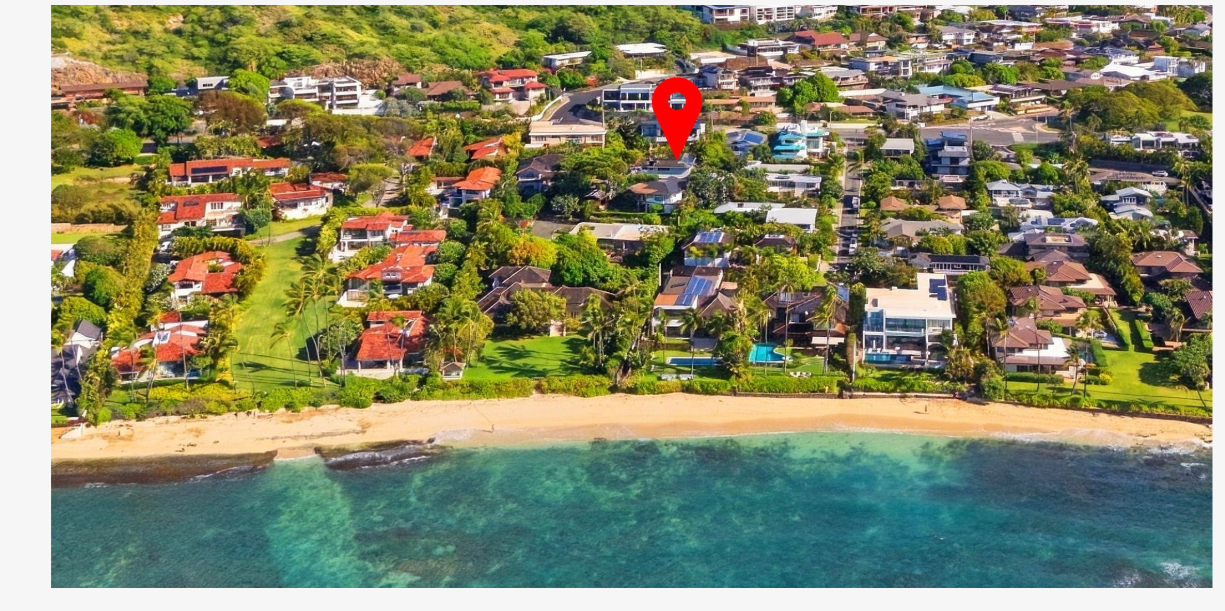
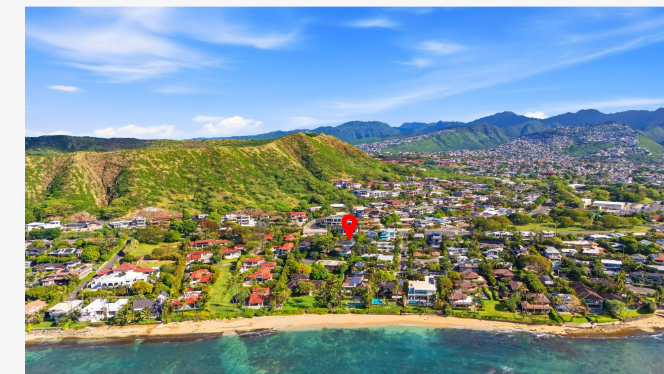
Aerial view of 245 Palaoa Place with Diamond Head crater rising behind the Black Point neighborhood

Built in 1953 and thoughtfully modernized ever since, 245 Palaoa Place just finished a recent remodel — reported at roughly $1 million — that brought the home fully into the present without losing its warm, island character. The refresh included two newly renovated bathrooms, a brand-new library off the main living space, and a completely rebuilt outdoor dining and entertaining area designed to take full advantage of Oahu's famously perfect weather.

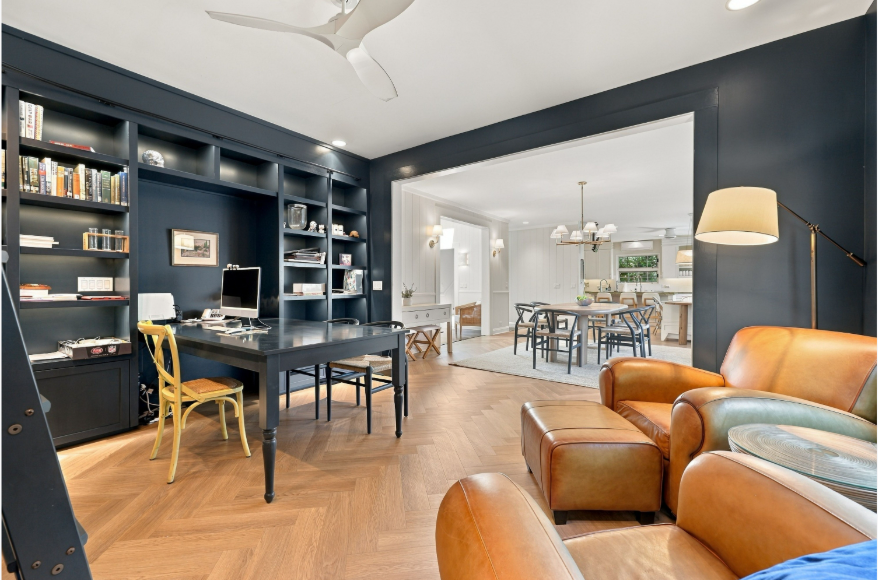
At 4,096 square feet, the layout gives you real room to spread out: five bedrooms, four full bathrooms, a two-car garage, and a primary suite that alone is worth the visit — it has its own ocean view, a private lanai, and enough space to carve out a home office if you need one. Downstairs, the new library (all deep navy built-ins, warm wood floors, and a wall of books) opens directly into the dining room and kitchen, so the home flows easily between quiet and social spaces.

The new library at 245 Palaoa Place opens directly into the dining room and kitchen

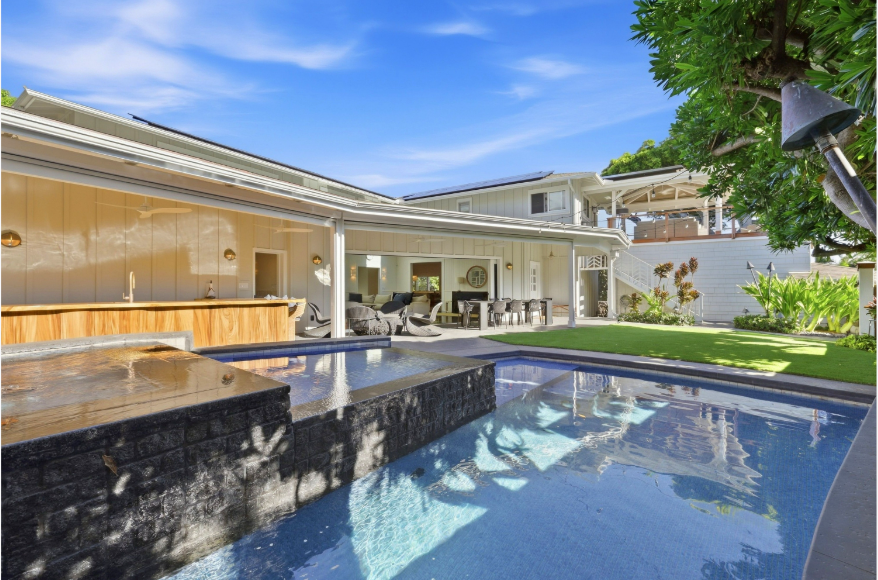
Out back, the entertaining spaces are just as considered. A gated pool, hot tub, and kiddie pool are framed by a freshly landscaped yard, with an outdoor kitchen and dining area set up to host anything from a quiet family dinner to a full-blown sunset party. It's the kind of backyard that makes you cancel other plans.

The pool, spa, and outdoor kitchen at 245 Palaoa Place, framed by lush landscaping

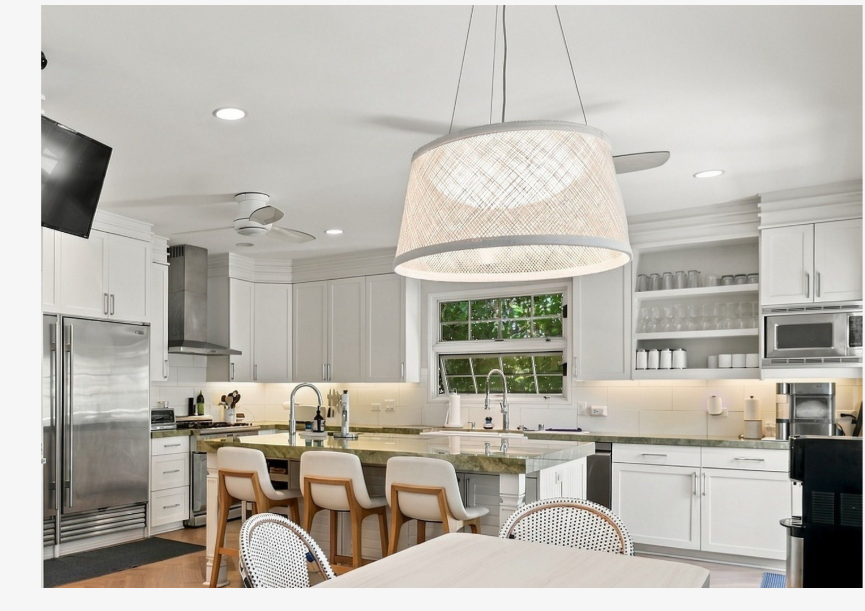
Inside, the kitchen has been finished with the same care — clean white cabinetry, a long stone-topped island with seating for the whole family, stainless appliances, and a statement pendant light that ties the whole room together. It's a kitchen built for real cooking and real gathering, not just photographs.

The remodeled kitchen at 245 Palaoa Place, with its oversized island, custom lighting, and views out to the garden

Diamond Head: A Neighborhood, Not Just a View

It's easy to talk about Diamond Head as scenery — the crater is one of the most photographed landmarks in the Pacific, after all. But for the people who actually live here, Diamond Head is a neighborhood in the fullest sense: quiet, walkable streets lined with plumeria and monkeypod trees, historic estates tucked behind hedges, and a community that has protected its low-key, unhurried character for generations.

245 Palaoa Place sits within the section of Diamond Head that blends into Black Point and Ka'alawai — an enclave of roughly seventy-five homes wedged between Diamond Head proper and Kahala, famous for dramatic homes perched above black lava outcroppings and some of the clearest water on this side of the island. Ancient Hawaiians called this stretch of coastline Kupikipiki'o, meaning "turbulent water," for the way the surf churns against the rocks at Black Point during a big south swell. It's a name that still fits on the right day, even as the neighborhood today is better known for its calm, private beaches than its turbulence.

This is also a walker's neighborhood in a way that's rare in Honolulu. Diamond Head State Monument and its trailhead are minutes away for anyone who wants a sunrise hike with a summit view of the entire South Shore. Kapiolani Park, the Honolulu Zoo, and the restaurants and boutiques of Kaimuki and Monsarrat Avenue are a short drive or an easy bike ride away, while Kahala's shops and Waialae Country Club anchor the other end of the neighborhood. And yet, tucked back on a quiet cul-de-sac like Palaoa Place, you'd never know any of that hustle was nearby.

The Real Draw: Deeded Beach Access at Cromwell's Cove

Here's the detail that makes this particular address special, even by Diamond Head standards: 245 Palaoa Place sits directly above the coveted Cromwell's Cove, and comes with private deeded beach access just a few doors down. That's not a vague "close to the beach" — it's a legal, protected right of way to one of the most sought-after little coves on Oahu's South Shore.

Cromwell's has long been a favorite among locals for its combination of a small sandy pocket beach, a shallow reef that keeps the water calm on all but the biggest swells, and a lineup just offshore that draws surfers and longboarders at sunrise and sunset. It's the kind of beach that doesn't show up on tourist maps — no crowds, no concession stands, just a short walk down from the neighborhood and into the water. Locals also know it for tidepooling at low tide and for some of the most reliable people-watching-free sunset views on this side of the island.

A closer aerial look at the sandy beach and reef fronting the neighborhood at Cromwell's Cove

For surfers in particular, this location is close to a dream: excellent breaks are a short paddle from the sand, and the quality of the reef here means the waves are consistent without the crowds you'd find at more famous South Shore breaks. Whether your morning routine is a swim, a paddle out, or just a walk along the sand with coffee in hand, having deeded access this close to home changes the rhythm of daily life in a way that's hard to put into words until you've lived it.

Why This One Won't Last

Homes with true deeded beach access in Diamond Head and Black Point rarely come to market, and when they do, they move quickly. Combine that rare access with a recently completed remodel, a flexible five-bedroom layout, resort-style outdoor living, and one of the most storied micro-neighborhoods on Oahu, and it's easy to see why this listing is already generating serious interest.

Please note: this sale is subject to the seller identifying a replacement property, so timing is worth discussing early if you're considering an offer.

Let's Talk About 245 Palaoa Place

I'd love to walk you through this home in person — the photos are beautiful, but they don't fully capture what it feels like to stand on that lanai with the trade winds coming through, or to walk down to Cromwell's Cove for the first time. If you're curious about this listing, considering a move to Diamond Head, or just want to talk through what a property like this is really worth in today's market, reach out any time. I'm happy to schedule a private showing or answer any questions you have.

Tony Kawaguchi
The Kawaguchi Group, eXp Realty
(808) 201-3577

245 Palaoa Place, Honolulu, HI 96816 — 5 bed / 4 bath / 4,096 sq ft / $6,750,000 / MLS #202617416

Sept. 13, 2026

Hawaii's Inventory Is Building — Oahu Inventory Is Rising and Sales Are Cooling This Fall

The Oahu market this fall is doing something it has not done in a while: giving buyers a little breathing room. There are more homes to choose from than a year ago, and they are sitting longer before they sell. If you are buying, listing, or holding here, that shift changes how I would play it.

What the numbers actually show

Per List Sotheby's August 2026 market data, Oahu had 794 active single-family listings, up slightly from a year ago, and 2,512 active condos, up 4.1%. New listings jumped more, up 14.5% for single-family homes and 6.4% for condos versus last August. At the same time buyers eased off: pending single-family sales were down 7.6% and pending condos down 3.2%. More sellers are coming to market, fewer buyers are signing at last year's pace. On the neighbor islands the same story shows up as slower turnover, with Big Island homes averaging around 105 days on market, up from about 99.

Where buyers have room right now

The added inventory is not spread evenly. The softness is most usable in a couple of bands, single-family homes in the $500,000 to $700,000 range and condos in the $1 million to $2 million range, where listings are stacking up and sellers are more willing to move on price, repairs, or closing help. In the tightest, most in-demand pockets, good single-family homes still go fast, so "the market is cooling" is not a green light to lowball everywhere. It is a reason to be selective and patient.

If you are listing this fall

Price to today, not to last spring. With more competition on the shelf and buyers taking their time, the homes that sell are the ones priced right from the start. The overpriced listing that a hot market would have rescued a year ago now just sits and goes stale. A realistic first number and good presentation matter more this fall than they have in a while.

First-time buyers should not sit this out

If you have been waiting on the sidelines, more inventory and a little negotiating room is exactly the window worth using. Hawaii's HHFDC offers below-market first-time-buyer loan programs, with rates recently in roughly the 5.40% to 5.95% range depending on the program. To be clear, those are loans with real terms and eligibility rules, not free money, so run them with a licensed lender against your own numbers before you count on anything.

What I am telling clients this week

Buyers, you have more choices and more leverage than a year ago, so use it, but stay decisive on the genuinely good listings. Sellers, meet the market on price and you will still sell well; fight it and you will chase it down. If you want a read on your specific price band or neighborhood, reach out and I will pull the current numbers for you.

Tony Kawaguchi, R(B), The Kawaguchi Group at eXp Realty. Hawaii licensed broker RB-21841, 20+ years and over $1 billion in Oahu sales. Educational only, not financing advice; confirm any loan program with a licensed lender.

Posted in Market Updates
Sept. 12, 2026

The Highest-Rated Public Schools in Hawaii (2026 Update)

School quality comes up early with almost every buyer who has kids, usually right after price and commute. It is a fair question, and it is also one where I am careful about what I can and cannot tell you. I am a real estate broker, not the Department of Education, so what follows is not my ranking, and it is not an endorsement of any school or any neighborhood. It is a plain-language look at which Hawaii public schools currently rate highly on the major third-party sources, how to read those ratings, and how to check the facts for a specific address yourself.

How to read these ratings (start here)

The lists below draw on publicly available third-party ratings, mainly Niche and GreatSchools, alongside state performance data from the Hawaii Department of Education and Smarter Balanced testing. A few things to keep in mind before you use any of it:

  • Ratings are opinions and snapshots. They blend test scores with survey reviews and shift from year to year. Treat them as one input, not a verdict.
  • Attendance boundaries are set by HIDOE and do change. A home is not guaranteed to feed a given school, so confirm the assigned school for a specific address directly with the Department of Education before you rely on it.
  • Public school is not the only path. Hawaii has a large private and charter system, and plenty of families mix and match.
  • This is general information, not advice about where you should live. Choose the home and community that fit you, use school data as one piece of that, and verify it independently.

Public high schools that rate highly, by island

On the major rating sites, a handful of public high schools consistently land near the top of the Hawaii lists:

  • Oahu: Mililani High (Mililani), Moanalua High (Honolulu), and Kalani High (Honolulu).
  • Hawaii Island: Waiakea High (Hilo).
  • Maui: Maui High (Kahului) and King Kekaulike High (Pukalani).
  • Kauai: Waimea High (Waimea).

What these tend to share in the data is test performance at or above the state average along with strong reviews for teachers and programs. The specific scores move year to year, so pull the current numbers from HIDOE and the rating sites for any school you are weighing.

Highly rated elementary schools

Elementary ratings in Hawaii lean heavily toward Oahu on the major sites. Five that consistently show up at or near the top statewide:

  • Momilani Elementary (Pearl City, Oahu)
  • Mililani Ike Elementary (Mililani Mauka, Oahu)
  • Maunawili Elementary (Kailua, Oahu)
  • Ernest Bowen de Silva Elementary (Hilo, Hawaii Island)
  • Koloa Elementary (Koloa, Kauai)

Ten more Oahu elementary schools that rate highly on Niche and GreatSchools:

  • Manoa Elementary (Manoa, Honolulu)
  • Noelani Elementary (Manoa, Honolulu)
  • Mililani Mauka Elementary (Mililani Mauka, Oahu)
  • Waikiki Elementary (Waikiki, Honolulu)
  • Palisades Elementary (Pearl City, Oahu)
  • Koko Head Elementary (East Honolulu, Oahu)
  • Mayor John H. Wilson Elementary (Kaimuki, Honolulu)
  • Hokulani Elementary (Kaimuki, Honolulu)
  • Pauoa Elementary (Pauoa, Honolulu)
  • Ma'ema'e Elementary (Nuuanu, Honolulu)

How to actually vet a school for your address

This is the part I tell every buyer, because it beats any ranking:

  • Confirm the assigned school. Use the HIDOE school-finder for the exact address, since boundaries and geographic exceptions change.
  • Pull the current state data. Smarter Balanced proficiency and the school's HIDOE accountability report give you the real numbers, not a composite letter grade.
  • Read the third-party pages for context. Niche and GreatSchools aggregate scores and reviews, which is useful as long as you remember the reviews are subjective.
  • Visit. Call the office, ask about a campus tour, and bring your own questions. Fifteen minutes on campus tells you more than a rating.

The honest summary

The schools above are the ones where the third-party ratings and the state data currently line up well. That does not mean another public school will not be the right fit for your child, and it does not say anything about which neighborhood is right for you. If you tell me the schools that matter to you, I can help you understand which areas fall inside those attendance zones, and then you verify the specifics with HIDOE. That is a question about geography and boundaries, which is something I can actually help with.

Sources

  • Hawaii State Department of Education, school directory and accountability reports: https://www.hawaiipublicschools.org
  • Hawaii DOE Strive HI / Smarter Balanced performance data: https://www.hawaiipublicschools.org/VisionForSuccess/AdvancingEducation/StriveHIPerformanceSystem/
  • Niche, Hawaii public school rankings: https://www.niche.com/k12/search/best-public-elementary-schools/c/honolulu-county-hi/
  • GreatSchools, Hawaii: https://www.greatschools.org/hawaii/

(Per-school Niche and GreatSchools citation links from the original post can stay as-is beneath this list.)

If you are relocating and trying to line up neighborhoods with the schools on your list, reach out and I will map the attendance areas with you.

Tony Kawaguchi, R(B), The Kawaguchi Group at eXp Realty. Hawaii licensed broker RB-21841, 20+ years and over $1 billion in Oahu sales. This is general educational information, not school-placement or legal advice; confirm attendance boundaries with the Hawaii Department of Education.

Posted in General
Sept. 11, 2026

Oahu's Empty Homes Tax Just Died Again — Oahu's Empty Homes Tax Failed Again. Here's Why It Matters

If you own a second home, a rarely-used condo, or an Oahu investment property that sits empty much of the year, here is one less thing to worry about for now. In late July the Honolulu Charter Commission voted down a proposal that would have asked voters this November to create a citywide empty homes tax. It is the second time in under a year the idea has died just short of the ballot, and the pattern is worth understanding.

What happened

The proposal, P170, needed nine of thirteen commissioners to advance to the November ballot. It got eight. All six City Council-appointed commissioners backed it, but only two of Mayor Rick Blangiardi's seven appointees did, and the administration lobbied hard against sending the question to voters. Around the same time, City Council Chair Tommy Waters let his own version, Bill 46, die without a final vote rather than watch it fail on the floor after coming up a vote short. Both routes to an empty homes tax hit a wall within about two weeks of each other.

Why it keeps coming back, and keeps failing

The appeal is easy to see. A tax on long-empty homes gets pitched as a way to push unused units back into the housing supply and raise revenue in one move. The opposition is just as consistent: hard questions about how you define and enforce "empty," worries about hitting the wrong owners, and resistance to another tax layer in an already expensive place to own. That tension is why the idea has real support and keeps stalling at the final step.

What it means if you own a vacant or investment property

For this cycle, nothing changes. There is no empty homes tax on Oahu, and neither failed effort created a new obligation for you. What I would not do is assume it is gone for good. Ideas like this tend to come back in a new form, so if a vacant property is part of your plan, factor in that a future version could pass, and pay attention to how any next proposal defines an empty home.

Threads still worth watching

Expect the concept to resurface, whether as another charter proposal or a fresh Council bill, and read the definitions and exemptions closely when it does. That is where a policy like this either hits genuinely idle units or sweeps in owners it was never meant to. If you are weighing a purchase where the empty homes question affects your numbers, that is worth a real conversation now, not after the next vote.

Where I would leave it

No tax today, real odds it returns someday, and a lot riding on the fine print if it does. If you want to talk through how a possible empty homes tax could affect a specific property or plan, reach out and I will give you a straight read. This is general information, not tax or legal advice, so confirm specifics with a licensed tax professional.

Tony Kawaguchi, R(B), The Kawaguchi Group at eXp Realty. Hawaii licensed broker RB-21841, 20+ years and over $1 billion in Oahu sales.

Posted in Market Updates
Sept. 9, 2026

Mortgage Rates Are Stuck Near 6.7%. How to Plan Around It

The rate cut a lot of buyers have been waiting for has not arrived, and it may not this fall. The more useful news is that Hawaii's market has kept moving anyway, so the real question is less "when do rates drop" and more "how do I plan around where they are."

Where rates actually sit

Freddie Mac put the average 30-year fixed at 6.71% as of September 3, 2026, about the highest in a year and up slightly from the week before. Some forecasts have rates easing toward the mid-6s, roughly 6.4%, by the end of the quarter, but that depends on incoming economic data and is not something I would bank a purchase on. Plan for the rate you can get today, and treat any dip as a refinance opportunity down the road.

Hawaii is outrunning the rate story

Higher rates were supposed to cool things, and on volume they have not. July 2026 data had statewide single-family sales up more than 13% year over year and condo sales up nearly 11%, with Oahu single-family sales up about 20%. Buyers are adjusting to the rate environment rather than waiting it out.

Houses and condos are two different markets

This is the part that changes your strategy. On Oahu, single-family supply is tight, under three months, and well-priced homes sell fast; the Oahu single-family median ran about $1,224,500 and good listings were going in around two weeks. Condos are looser, closer to six months of supply statewide with more room to negotiate, and softer still on Maui and Kauai, where the statewide condo median sat around $560,000. Same island, two very different negotiating positions depending on what you are buying.

How I would approach a purchase at these rates

Get fully pre-approved before you shop, so you know your real payment at today's rate and can move when the right home shows up. If you are after a single-family home in a tight pocket, be ready to act. If you are buying a condo, especially on a neighbor island, take your time and use the leverage the extra supply gives you. Buy on the payment you can carry now, not on a rate cut you are hoping for.

What sellers should price for

Single-family sellers in strong areas still hold the upper hand, but the buyer pool is rate-sensitive, so a sharp initial price still beats a hopeful one. Condo sellers are competing harder and should price and prepare accordingly.

The move I would make now

Rates near 6.7% are the reality to plan around, not a reason to freeze. Whether that means buying now and refinancing later or pricing a listing to move, the right call depends on your property and your numbers. Work the financing piece with a licensed lender, and reach out to me for the market read. This is general information, not financing advice.

Tony Kawaguchi, R(B), The Kawaguchi Group at eXp Realty. Hawaii licensed broker RB-21841, 20+ years and over $1 billion in Oahu sales.

Posted in Market Updates
Sept. 8, 2026

What It Really Costs to Live in Hawaii in 2026

If you've searched "cost of living in Hawaii," you've probably already seen the headline stat: Hawaii is the most expensive state in the country, full stop. That part is true, and it's not close — multiple independent indices put Hawaii's overall cost of living somewhere between 84% and 93% above the national average, with housing doing most of the damage.

But after 20 years and more than $1 billion in Oahu sales, I can tell you the generic statewide number is the least useful thing in your budget. What actually matters is what things cost in the neighborhoods people ask me about most — Hawaii Kai, Kahala, Diamond Head, Kaimuki — and the costs that don't show up in the calculators at all: HOA fees, special assessments, and what it really takes to carry a short-term rental condo. So here's the version I wish someone had handed me: real numbers, organized the way an actual move or purchase decision gets made, plus a few line items the generic cost-of-living posts skip entirely.

The headline number, quickly

Hawaii's overall cost of living index sits in the 180s (national average = 100), and it's been there for a while. Housing is the single biggest driver — Oahu's housing costs run roughly three times the national average — followed by electricity (Hawaiian Electric's residential rate is still the highest in the country, hovering in the low-to-mid 40s per kWh) and groceries (about 50% above mainland prices, since 85–90% of what's on the shelf arrives by ship). Strip housing out of the equation and Hawaii's premium drops to something closer to 25–30% — real, but a very different conversation than "double the mainland."

That framing matters because it changes the question. The real question isn't "is Hawaii expensive" — everyone already knows that. It's "where does the math actually work for my household," and that answer depends heavily on which side of the island you're looking at.

East Honolulu housing: the numbers I actually quote clients

Most cost-of-living articles give you an Oahu-wide average, which flattens Kapolei and Kahala into the same number. That's not useful if you're specifically looking at the east side. Here's roughly where things sit as of this year:

Rentals

  • Hawaii Kai 2-bedroom condo: typically $2,800–$3,800/month
  • Kahala single-family home: $6,000–$12,000+/month depending on lot and ocean proximity
  • Diamond Head 2-bedroom: $3,200–$4,500/month
  • Kaimuki 2-bedroom (more attainable entry point): $2,400–$3,200/month

Buying

  • Hawaii Kai single-family median: roughly $1.3–$1.6 million
  • Kahala single-family median: often $3 million and up, with oceanfront well beyond that
  • Diamond Head: highly variable, but expect $2 million+ for a standard single-family lot
  • Kaimuki: the relative bargain of the east side, with fixer-uppers still occasionally under $1 million

If you're comparing these to a statewide "$1.2 million Oahu median," you can see why: East Honolulu skews the average up. It also means the affordability strategies that work in Kapolei or Ewa Beach (new construction, larger lot sizes, lower price per square foot) don't translate here. On this side of the island, the affordability lever is usually condo versus single-family, not neighborhood versus neighborhood.

The cost almost nobody budgets for: HOA and AOAO fees

This is the one I see catch people off guard more than any other line item, and it's largely absent from the generic cost-of-living posts. A statewide housing analysis released this year found the median advertised HOA/AOAO fee on Oahu listings had climbed to roughly $880 a month — and that's just the advertised, ongoing fee. It does not include the special assessments that have become increasingly common in older buildings where reserve funds didn't keep pace with maintenance costs, and those can run into the tens of thousands of dollars per unit with little warning.

If you're comparing a $700,000 condo to a $900,000 single-family home, don't stop at the sale price. Run the AOAO fee, ask for the last three years of board meeting minutes, and ask directly whether a special assessment is being discussed. This single step has saved more than one client from a five-figure surprise in year two of ownership.

Utilities and groceries: the imported-island tax

  • Electricity: Hawaiian Electric's residential rate is still the highest in the nation. A condo with minimal AC use might run $100–$180/month; a larger single-family home with regular AC can run $350–$600. Homes with rooftop solar and net metering routinely cut that to $40–$120.
  • Water/sewer: $80–$180/month for a typical household.
  • Internet and cell service: budget $180–$300/month combined for a household of two or more.
  • Groceries: roughly 50% above the national average, driven by the fact that most food arrives by container ship. Expect $550–$750/month for a single adult, $1,000–$1,400 for a couple, and $1,500–$2,200+ for a family of four, before any Costco or farmers-market discipline.

Transportation

Gas has been sitting in the high-$4 to mid-$5 range per gallon statewide, with Oahu typically on the lower end and the neighbor islands running higher. Insurance, registration, and the near-mandatory second car per adult (public transit coverage is good in town, thinner as you move toward Hawaii Kai and beyond) push most households to budget $400–$700/month in total transportation costs once gas, insurance, and parking are included.

The angle most cost-of-living posts skip: what it costs to own a vacation rental condo

Because a large part of my business is Oahu short-term vacation rental (STVR) condos, I get this question constantly and it's genuinely absent from most cost-of-living content, which is written for people moving here to live, not to invest. If you're weighing a legal STVR purchase, the real monthly carrying cost stack looks different from a primary residence:

  • Transient Accommodations Tax: 10.25% of gross rental revenue, on top of the General Excise Tax
  • General Excise Tax: 4% state plus a 0.5% county surcharge on Oahu, applied to rental income
  • Property tax at the hotel/resort classification, which runs meaningfully higher than the owner-occupant residential rate
  • Property management fees, typically 20–30% of gross revenue for full-service management
  • AOAO fees, which tend to run higher in condo-hotel and resort-zoned buildings than in standard residential buildings

None of this means the math doesn't work — plenty of these properties cash-flow well — but it means the "cost of living" framing that most sites use doesn't apply. If this is the path you're considering, it deserves its own conversation before you write an offer, not a spreadsheet built off a generic cost-of-living calculator.

Why this matters more than the sticker price: Hawaii is losing people over it

This isn't just an affordability talking point — it's showing up in the data. The University of Hawaii Economic Research Organization found that Hawaii has lost more residents than it has gained in 23 of the past 25 years, and their analysis points to something sharper than "it's expensive": wage growth simply hasn't kept pace with costs. Hawaii's public school system is feeling it directly — there have been recent, specific cases of teachers on Oahu losing housing mid-lease with 45 days' notice and struggling to find anything else they can afford, to the point of considering leaving the state entirely.

I bring this up not to scare anyone off, but because it's the honest backdrop behind every "what salary do I need" conversation. The math genuinely does not work for every household, and pretending otherwise doesn't help anyone make a good decision.

What income actually makes this work, realistically

For East Honolulu specifically, given the housing numbers above:

  • Single adult, renting a condo: $90,000–$110,000 comfortably
  • Couple, renting or owning a condo: $150,000–$190,000 combined
  • Family of four owning a single-family home in Hawaii Kai or Kaimuki: $220,000–$300,000+ combined
  • Family of four in Kahala or Diamond Head: this is genuinely a different income bracket, often well north of $350,000 combined unless there's significant existing equity or family assistance

For a lot of local, multi-generational households, the math works differently — three generations sharing a property is a real and common strategy here, not a workaround. For someone relocating without that network, the numbers above are the honest floor for this side of the island.

What actually moves the needle if you're trying to make it work

  • Consider a condo over a single-family home as your entry point, but budget the AOAO fee like a second mortgage payment, not an afterthought
  • Ask about first-time homebuyer programs through the Hawaii Housing Finance and Development Corporation before assuming you need 20% down — several down payment assistance options exist, though it's worth understanding these are typically structured as forgivable second mortgages with occupancy requirements, not simply cash
  • If you're buying, get quotes on rooftop solar before you close — it's one of the few costs in Hawaii where the return on investment is genuinely fast
  • Kaimuki and parts of the Ewa/Kapolei corridor remain the most realistic entry points if East Honolulu proper is out of reach on your current budget
  • Get pre-approved with a lender who actually understands Hawaii's condo insurance and AOAO underwriting quirks — a mainland lender unfamiliar with special assessment risk can slow or kill a deal

Let's run your actual numbers

Generic calculators are a starting point, not a plan. If you're weighing a move to East Honolulu, deciding between renting and buying, or looking at an STVR condo purchase, I'm happy to walk through your specific numbers — no script, no pressure. Reach out to The Kawaguchi Group and let's figure out honestly whether the math works for your situation.

Sources: Hawaiian Electric residential rate filings; U.S. Bureau of Labor Statistics Honolulu Consumer Price Index; Honolulu Board of Realtors MLS data; University of Hawaii Economic Research Organization (UHERO) 2026 Hawaii Housing Factbook and migration research; Hawaii News Now reporting on teacher housing and out-migration; Hawaii Department of Taxation (GET and TAT rate schedules); Hawaii Housing Finance and Development Corporation program materials. Neighborhood rent and sale figures reflect current East Honolulu market activity as tracked by The Kawaguchi Group.

Sept. 7, 2026

Japanese Capital Is Back in Hawaii Real Estate

Hawaii just got a reminder of how much international money can move this market. A run of large land and hotel deals to Japan-based buyers pushed the state's commercial investment total to nearly $3 billion last year, and analysts are forecasting another 20% jump in deal activity. For everyday buyers and sellers, this is less about hotels changing hands and more about what that confidence signals.

The deals behind the headline

Three transactions tell the story: the land under the Royal Hawaiian Hotel at roughly $510 million, the land under the Four Seasons Resort Hualalai at around $400 million, and the Hyatt Regency Waikiki at about $215 million. Those three alone put more than $1 billion of Japanese capital into Hawaii property. The figures trace back to Colliers Hawaii's investment review, reported through Pacific Business News.

Why now

Even with a weaker yen making dollar purchases more expensive, Japanese institutional buyers are treating Hawaii real estate as a durable, dollar-denominated place to hold capital. When large, patient money is willing to pay up despite a currency headwind, that is a vote of confidence in the long-term value of Hawaii property.

It is not just hotels

The part that reaches regular buyers and sellers is where this money is spreading. Beyond the resort trophies, investors have been moving into multifamily residential buildings, particularly on Oahu. That is the same rental and for-sale housing stock local owners and buyers compete for, so institutional interest there touches prices closer to home than a hotel sale does.

What it signals for local buyers and sellers

If you are selling, especially a fee-simple parcel or a multifamily property, this kind of demand tends to support stronger pricing. If you are buying, you are not bidding against these funds for a house in Kaimuki, but the broader confidence they represent helps hold values up across the market. The risks to watch are the usual ones for capital flows: higher costs and geopolitical uncertainty could cool the enthusiasm as fast as it arrived.

What I am watching next

Whether that forecasted 20% jump in deal activity actually lands, and whether the multifamily buying keeps widening, since that is the piece with the most direct read-through to local prices. If you want to talk about what this means for a specific property or plan, reach out. This is general market information, not investment advice.

Tony Kawaguchi, R(B), The Kawaguchi Group at eXp Realty. Hawaii licensed broker RB-21841, 20+ years and over $1 billion in Oahu sales.

Posted in Market Updates
Sept. 3, 2026

Hawaii Eases Leasehold Rules to Revive a Stalled Affordable Housing Pilot

This summer, Governor Josh Green signed a bill that quietly reshapes one of Hawaii's more promising ideas for getting local families into homes they can actually afford. Act 121 amends the state's 99-Year Leasehold Program, the framework behind a planned 370-unit condo project in Kakaako that had stalled because almost nobody wanted to buy in under the original rules. If you have been priced out of Oahu's market, or you are watching from another island wondering whether something similar could reach you, this one is worth understanding before the next round of pre-sales opens.

What Act 121 actually changes

The 99-Year Leasehold Program lets the state and counties lease publicly owned land to a developer for affordable, owner-occupied condos. Keeping the land cost out of the purchase price is what makes the units cheaper than comparable fee-simple condos nearby. The catch in the original 2023 law was that every unit, market-rate and income-restricted alike, had to stay owner-occupied for the full 99 years, with no way out. Act 121 narrows that requirement to just the reserved, income-restricted units and shortens the owner-occupancy commitment to 10 years instead of forever. Market-rate units still have to be offered to owner-occupants first, but if they do not sell within 60 days, up to 40% of them can go to any Hawaii resident, whether they plan to live there or not. The law also tightens eligibility and affordability rules so the reserved units stay aimed at the income bracket they were meant to serve.

Why the original deal fell apart

On paper the first version looked good: cheaper condos on public land for local buyers. In practice, a 99-year owner-occupancy lock with no exit made people nervous. Buyers worried about what happens if life changes and they need to move, rent it out, or sell, and lenders are cautious about leasehold to begin with. Put those together and a project that was supposed to sell briskly instead sat, which is why the state went back and loosened the rules. If you want the background on why leasehold changes the math at all, my leasehold versus fee simple guide walks through it.

Who this actually helps

If you are a local buyer priced out of fee-simple condos, this is the group the program is built for, and the new flexibility makes it more realistic. A 10-year owner-occupancy commitment on the reserved units is something most buyers can plan around in a way that "forever" never was. Market-rate buyers get a shot too, with the 60-day, up-to-40% resident provision opening those units more widely if they do not sell to owner-occupants first. It is still leasehold, so read the lease terms carefully and have an attorney review them, but for the right buyer this is a genuine path in.

The rest of the market hasn't slowed down

One program does not change the broader picture. Oahu's regular market is still tight and still moving, and an affordable pilot like this, even at 370 units, is a small piece of overall supply. Worth watching, worth applying for if you qualify, but not a reason to put a conventional home search on hold if that is the better fit for you.

If you want to know whether a leasehold affordable unit or a conventional purchase makes more sense for your situation, reach out and I will walk you through the trade-offs honestly. This is general information, not legal or financing advice; confirm program terms with the developer or HHFDC and have an attorney review any lease.

Tony Kawaguchi, R(B), The Kawaguchi Group at eXp Realty. Hawaii licensed broker RB-21841, 20+ years and over $1 billion in Oahu sales.

Posted in Market Updates