
Retiring in Hawaii usually starts with the view. Fair enough. But after 20+ years selling on Oahu, I can tell you the view is the easy part. The decisions that actually shape your retirement here are quieter: how you hold title, how your income gets taxed, whether you can still climb your own stairs at 80, and how far you are from Queen's or Straub when something goes sideways. Here's the order I'd work through before anyone writes an offer.
First question: are you moving your income here, or just your mailbox?
Hawaii is kinder to retirees on taxes than its reputation suggests, but only in specific ways. The state does not tax Social Security benefits, and it does not tax employer-funded pension income, which includes military retirement pay. That's a real advantage if a pension or Social Security is the backbone of your retirement.
Where it flips: money you pull from accounts you funded, like a traditional IRA or your own 401(k) deferrals, is generally taxable as Hawaii income, and the state's brackets run from 1.4% all the way up to 11% at the top. So two households with the same spending can owe very different state tax depending on where their income comes from. If most of your retirement is in a 401(k) or IRA, model that out before you fall in love with a house. This is educational, not tax advice, so please run your actual numbers by a Hawaii-licensed tax professional.
The property-tax break almost no one files for on time
Oahu already has one of the lowest effective property-tax rates in the country. On top of that, if you own and live in your home, you can claim a home exemption that knocks taxable value off the assessment, and the exemption is larger once you turn 65.
Right now, through June 30, 2027, the basic Honolulu home exemption is $120,000 of assessed value, rising to $160,000 for owner-occupants age 65 and older. The City has those figures scheduled to increase to $140,000 and $180,000 on July 1, 2027. The catch is the calendar: you have to file your exemption claim with the City by September 30 for it to apply to the following tax year. Miss it and you can leave a full year of savings on the table.
Buy the floor plan that works for the long haul, not just the one you like today
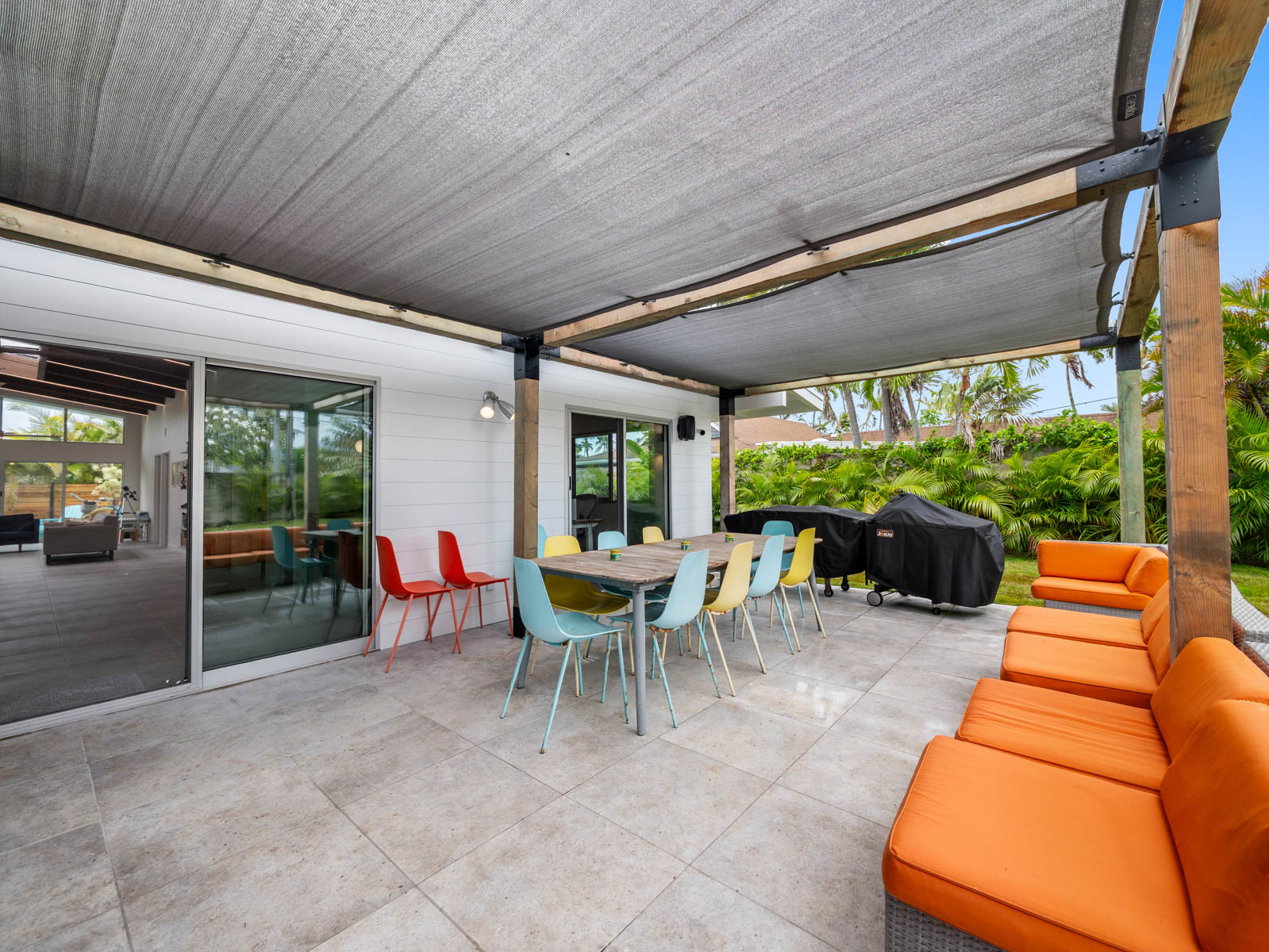
This is the part a spreadsheet won't tell you. A lot of Oahu's prettiest homes are built into hillsides, which means stairs, sometimes a lot of them. If you're buying a place you intend to grow old in, I push clients to look hard at single-level living from the start.
On the house side, single-story floor plans and a level walk to the car are easier to find in flatter areas like parts of Hawaii Kai, Aina Haina, and Kailua. On the condo side, an elevator building with secured parking solves the stairs problem outright. Think about door widths, step-in showers, whether the primary bedroom and a full bath are on the entry level, and how far it is from the garage to the kitchen with an armful of groceries. None of that shows up in the listing photos.
Condo or house? Run it on carrying cost, not sticker price
Plenty of people trade a mainland house for an Oahu condo and are happy with the move. Just go in with your eyes open on two things.
First, maintenance fees. A condo's monthly AOAO fee can run from a few hundred dollars to well over a thousand, and in older buildings a special assessment for plumbing re-pipes or spalling repair can land without much warning. The fee buys you a lot, but read the budget, the reserve study, and the minutes before you commit, not after.
Second, how the building holds title. A meaningful share of Oahu condos, especially in Waikiki and parts of town, are leasehold rather than fee simple. Leasehold can look like a bargain on price, but you don't own the land, the lease rent can reset, and the lease has an end date, which matters a great deal if you plan to hold the property for decades or leave it to someone. I'm not against leasehold, but it deserves a hard look. I wrote a full breakdown of the difference, linked below.
Medical access and the distance to the mainland
Medical access is a practical, objective factor worth mapping before you pick an area. Oahu's major hospital systems, including The Queen's Medical Center, Straub, and Kaiser Permanente's Moanalua facility, are concentrated in and around the urban core. Specialist care in particular tends to be town-side. If you're choosing between a quiet windward or North Shore spot and something closer in, factor the drive to the care you actually use, because island traffic turns a 15-mile trip into a real commitment.
The other honest conversation is distance from the mainland. Flying back and forth is a five-hour trip minimum from the West Coast and a budget line, not an afterthought. The distance is easy to underestimate from a vacation. Better to weigh it now.
A word on "the condo will pay for itself"
Some folks plan to offset costs by renting the place short-term when they're on the mainland. Be careful. Oahu's short-term rental rules are strict and have tightened, legal nightly-rental zones are limited, and many buildings prohibit it outright in their house rules regardless of what the island zoning says. Do not bank your retirement math on rental income until the specific unit, building, and zone are confirmed to allow it. If a vacation-rental strategy is central to your plan, that's a different search with different inventory, and we'd approach it deliberately.
The estate-planning piece luxury buyers miss
Hawaii is one of a minority of states with its own estate tax. The exemption sits around $5.49 million per estate, separate from the federal exemption, and there's no state inheritance tax. For most buyers that's not in play, but if you're buying at the high end of East Honolulu or Kahala, your Hawaii real estate can push an estate over that line. Coordinate the purchase and how you hold title with an estate attorney. Again, educational only.
How I'd sequence it
Get your tax picture modeled first, because it may change how much house you should carry. Lock in the care and distance factors next, since those narrow the map fast. Then shop floor plans and carrying costs, and only then start weighing views. Do it in that order and the view ends up being the reward, not the thing that talked you into a house that doesn't fit the next 25 years.
Frequently asked questions
Does Hawaii tax my retirement income?
It depends on the source. Hawaii doesn't tax Social Security or employer-funded pensions, including military retirement. But distributions from accounts you funded yourself, like a traditional IRA or your own 401(k) contributions, are generally taxable here, and rates go up to 11%. I always tell clients to have a Hawaii tax professional model their specific mix before they set a budget.
Is there a property-tax break for seniors on Oahu?
Yes. If you own and occupy the home, the Honolulu home exemption is currently $120,000 off assessed value, and $160,000 once you're 65. Both are scheduled to rise in July 2027. Just file your claim with the City by September 30 so it applies the following tax year. People miss that deadline constantly.
Should I buy a condo or a single-family home for retirement?
Honestly, it comes down to stairs and upkeep more than price. An elevator condo solves the stairs and hands off the maintenance, but you're taking on an AOAO fee and whatever the building's reserves look like. A single-level house gives you control but keeps the yard and roof on your plate. I'd rather show you the real carrying cost of each than guess.
Can I rent my place short-term when I'm away to help cover costs?
Maybe, but don't assume it. Oahu's short-term rental rules are tight, legal zones are limited, and plenty of buildings ban it in their own rules. I'd never let a client count on that income until we've confirmed the exact unit and building allow it in writing.
Is leasehold a problem for a long-term hold?
It deserves a hard look. You don't own the land, the lease rent can reset, and there's an end date, which matters more the later in life you buy. It's not automatically wrong, but I want you to see exactly what you're signing up for first.
This is general information from a licensed real estate broker, not legal, tax, insurance or financial advice. Rules and figures change, so confirm anything that affects your decision with the right licensed professional.
Sources: Honolulu Real Property Assessment Division, home exemption, Hawaii Department of Taxation, individual income tax, AARP Hawaii state tax guide, Honolulu DPP short-term rentals, Hawaii Department of Taxation, Outline of the Hawaii Tax System (2025), Form M-6 instructions (Hawaii estate tax exclusion $5,490,000)
Tony Kawaguchi, R(B), The Kawaguchi Group, eXp Realty. Hawaii broker, license RB-21841, 20+ years and $1B+ in Oahu sales, leading a team of 20+ agents.
Let's map your version of it
Everybody's retirement math is different, and the right move on Oahu depends on your income sources, your health picture, and how you actually want to spend your days here. If you're thinking through a move, reach out to me here and we'll build the plan around your numbers before we ever set foot in a house. You can also search current Oahu listings to get a feel for pricing.