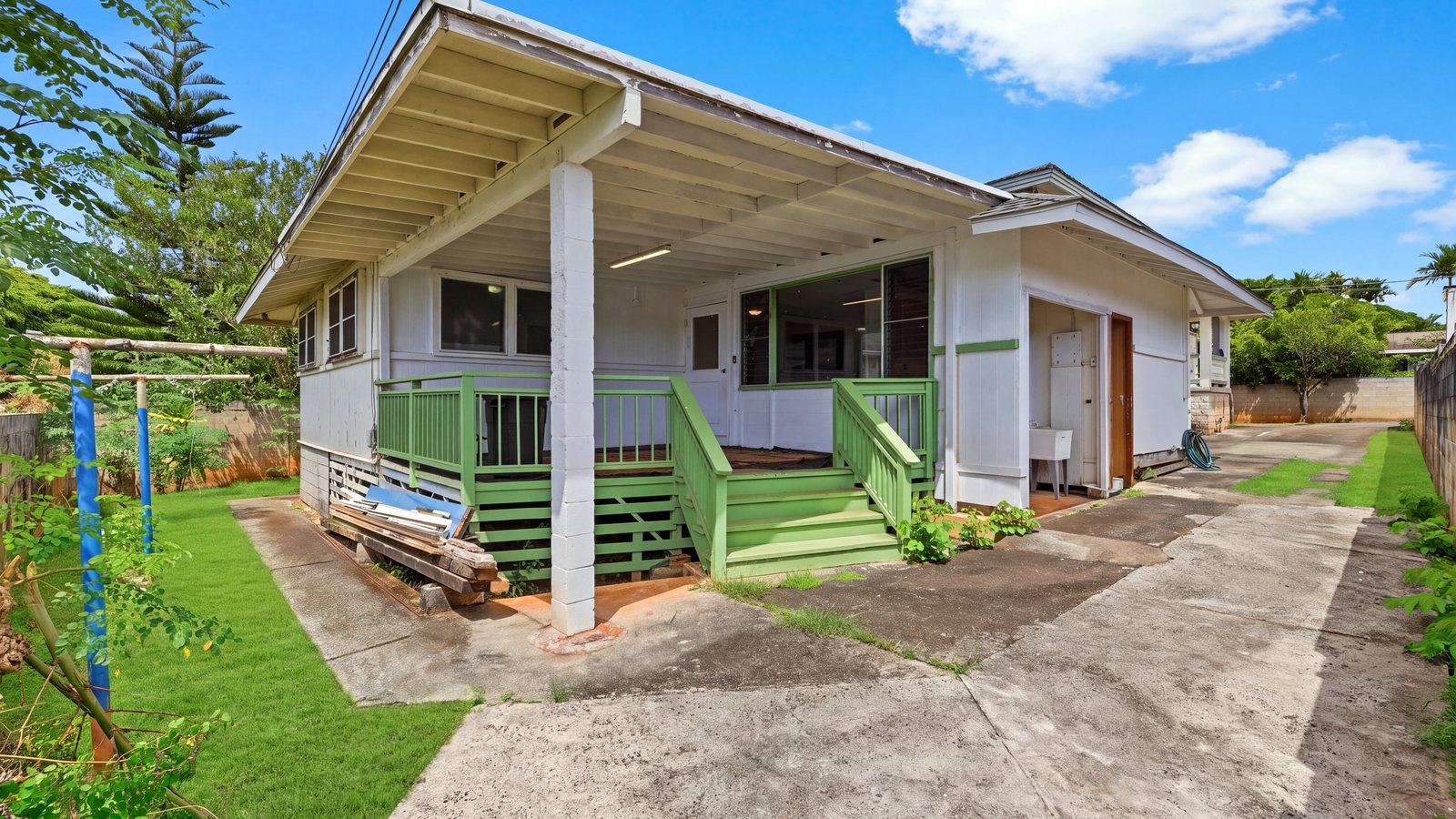
Most buyers think the home inspection is one appointment and one report. On Oahu it usually isn't. The items that actually move money in a Hawaii deal tend to sit outside the general report: termites, the cesspool question on older homes, the solar agreement attached to the roof, and the roof itself. Any of the four can turn a clean-looking house into a renegotiation. Here's how I walk clients through inspections here, and what I tell them to look at hardest.
What a Hawaii inspection actually covers (and what it doesn't)
First thing worth knowing: Hawaii does not license home inspectors at the state level. There's no state exam or mandatory certification to call yourself a home inspector here. That's not a reason to panic, but it is a reason to choose carefully. I steer clients toward inspectors who carry a credential from a national body like ASHI (American Society of Home Inspectors) or InterNACHI, because those come with a standards of practice and a code of ethics that a totally unregulated inspector may not follow.
A standard general inspection is visual and non-invasive. The inspector looks at the roof, structure, electrical, plumbing, appliances, drainage, and so on, and gives you a report. What it generally does not include are the specialty items: a termite report, a cesspool or septic evaluation, and a real review of any solar or photovoltaic agreement. Those are usually separate, and on an older Oahu property they're the ones I care about most. Your purchase contract sets an inspection contingency period, so you want your general inspector and your specialists lined up early, not scrambling in the last two days of the window.
Termites: the one I never let a buyer skip
Hawaii has two termite problems, and they're different animals. Drywood termites live inside the wood itself, often up in the framing or furniture, and you can have them without any contact with the soil. Formosan subterranean termites nest in the ground and tunnel up into the structure, and they are the aggressive, fast, genuinely destructive ones. A mature Formosan colony can do serious structural damage, and because so much of it is hidden, a house can look fine and still have an active problem.
This is why a termite inspection is standard practice in local transactions and why I treat it as non-negotiable. A licensed pest control operator does the inspection and issues a report (often called a termite inspection report or PC report). That report is its own document, separate from the general home inspection. If the home is financed with a VA loan, ask your lender early whether a termite report is required, and remember that who pays for the inspection and any treatment is something we negotiate in the contract rather than assume. I go deeper on this in my post on buying a house with termites, because a termite finding is almost never a reason to walk away. It's a reason to understand the scope and price out the fix.
Cesspools: the expense that surprises mainland buyers
If you're looking at an older home, especially outside the newer subdivisions, ask early whether it's on a cesspool. This is the single item that surprises mainland buyers the most. Under Act 125 (2017), Hawaii requires every cesspool in the state to be converted or upgraded (to a septic system or connection to sewer) by 2050. The state Department of Health counts roughly 88,000 cesspools statewide, with more than 11,000 of them on Oahu.
Here's why it matters at the closing table: converting a cesspool is a real expense, and the obligation follows the property. If you buy a home on a cesspool, that 2050 clock is now yours. The actual cost depends heavily on the lot, the terrain, access, and whether sewer is even available nearby, so I won't throw out a single number here. What I do is get a qualified contractor to look before my client is committed, so we're negotiating with a real estimate instead of a guess. The state has also been working on funding help, and I cover the state program in my piece on Hawaii's cesspool loan fund. None of this should scare you off a great house. It should just be priced in with eyes open, not discovered after you own it.
Solar: read the agreement before you fall for the panels
A roof full of PV panels can be a real asset or a complication, and the difference is in the paperwork. The two questions I ask immediately are whether the system is owned or leased, and what the grid agreement is.
On ownership: if the seller owns the panels outright, they usually convey with the home, and that's the clean case. If the panels are leased or financed through a third party, that agreement has to be transferred or assumed, and sometimes there's a UCC filing tied to the equipment that needs to be handled in escrow. I always want to see the actual lease or financing documents, not a verbal summary, because the monthly payment and transfer terms vary a lot.
On the grid side, the rules changed years ago. Hawaii's original Net Energy Metering (NEM) program closed to new residential applicants back in October 2015. Existing NEM customers were allowed to keep their agreements, which is why a grandfathered NEM system can be genuinely valuable, but newer systems fall under Hawaiian Electric's Smart Renewable Energy programs, with much lower export credits. If the system's value to you depends on how it interacts with Hawaiian Electric, confirm exactly which program the home is on before you assume anything. I keep more detail on my solar page, and for an existing system I always recommend verifying the current terms directly with the provider and with HECO.
Roofs and the island-specific stuff
Roofs here take a beating. Sun, salt air near the coast, and heavy rain in the valleys all age a roof faster than a lot of mainland buyers expect. On an older home I want to know the roof's age and condition early, because it affects two things at once: the repair budget and the insurance. Insurers increasingly care about roof age and condition, and a roof near the end of its life can complicate coverage or raise your premium. That ties straight into hurricane and flood coverage, which is its own conversation worth having before you commit.
A few other local items I flag for inspection: older electrical panels, plumbing in post-and-pier homes, drainage and grading on sloped lots (we have plenty of those), and any signs of prior water intrusion. A good inspector catches a lot of this, but even the best one misses things, which is exactly why I wrote up the things a home inspector will miss. Inspections reduce risk. They don't erase it.
FAQ
Do I really need a separate termite inspection in Hawaii?
In my experience, yes. The general home inspection isn't a substitute for a termite report done by a licensed pest control operator, and with Formosan subterranean termites on this island, I don't let buyers go without one. It's one of the cheapest forms of insurance in the whole deal.
How do I find out if a home is on a cesspool?
Ask me or your agent to check the records and the seller's disclosures, and have it confirmed during the inspection period. It's more common on older and more rural properties. If it is on a cesspool, I bring in a contractor for an estimate before you're locked in, because that 2050 conversion obligation transfers to you as the new owner.
Are leased solar panels a problem when buying?
Not a problem, just a step. Leased or financed systems come with an agreement that has to be transferred or assumed, and sometimes a UCC filing to clear in escrow. I always want the actual documents in hand so we know the payment, the term, and the transfer rules before closing. Owned, paid-off systems are the simple case.
Are Hawaii home inspectors licensed by the state?
No, Hawaii doesn't license home inspectors at the state level. That's why I recommend hiring someone certified through a national organization like ASHI or InterNACHI, so you're getting a defined standard of practice rather than guessing at someone's qualifications.
Can I waive the inspection to win a competitive offer?
I understand the temptation in a tight market, but I rarely recommend waiving it outright on an older home here. There are smarter ways to make an offer competitive without taking on termite, cesspool, or roof risk blind. Talk to me about structure before you give up your inspection contingency.
This is general information from a licensed Hawaii REALTOR, not legal, tax, insurance or financial advice. Rules and figures change, so confirm anything that affects your decision with the right licensed professional. Have a licensed inspector, pest control operator and contractor look at the specific home.
Sources: Hawaii Department of Health, cesspools, Hawaii Pest Control Board termite inspection report form, Hawaiian Electric Smart Renewable Energy programs, Hawaii State Auditor, Sunrise Analysis: Regulation of Home Inspectors (2019)
Tony Kawaguchi, REALTOR, license RS-66616, The Kawaguchi Group, eXp Realty (RB-21841). 20+ years and $1B+ in Oahu sales, leading a team of 20+ agents.
Thinking about buying on Oahu?
Inspections are where local knowledge actually earns its keep, because the report only tells you half the story. The other half is knowing what a finding means here and how to negotiate around it. If you're getting ready to buy, reach out to me here and let's talk through what to watch for on the specific home or neighborhood you have in mind, or start by searching current Oahu listings.