Haleiwa Real Estate: Homes, Prices and North Shore Town Guide
By Tony Kawaguchi, REALTOR, The Kawaguchi Group, eXp Realty. Updated November 2026.
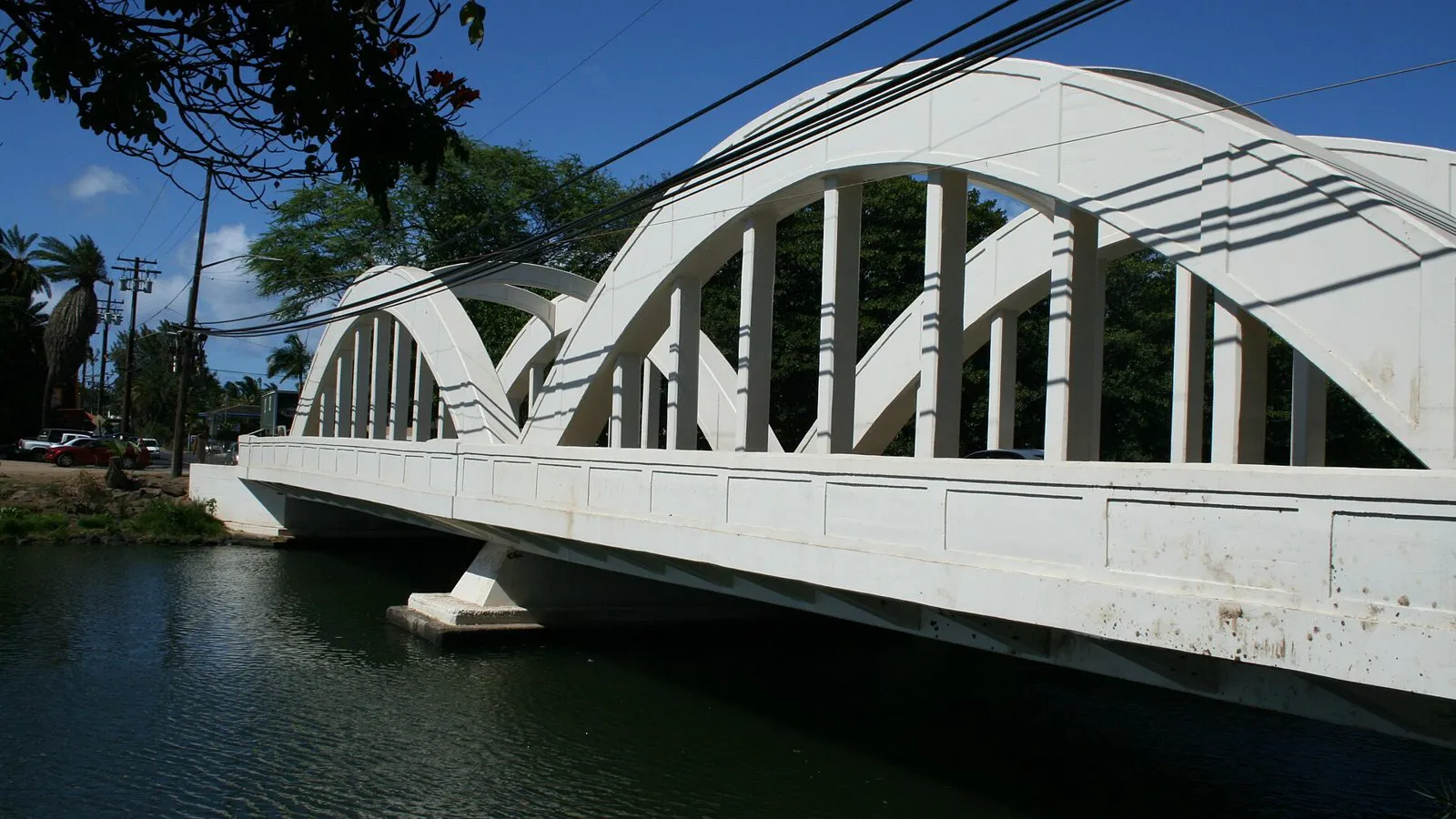
Photo: Calsidyrose, CC BY 2.0, via Wikimedia Commons.
Quick answer: Haleiwa is the historic town at the heart of the North Shore of Oahu, about 30 road miles from downtown Honolulu and 11 from Schofield Barracks. Homes are mostly older single-family houses, many built in the 1960s and 1970s or earlier, with some condos and beach homes. The Honolulu Board of REALTORS recorded a North Shore single-family median of $1,625,000 on 73 sales from January through October 2026, up 16% from a year earlier. Much of Haleiwa town sits in flood and tsunami evacuation zones, so check the maps early.
Sources: Honolulu Board of REALTORS, Oahu Local Market Update, October 2026 (compiled from HiCentral MLS); FEMA National Flood Hazard Layer and State of Hawaii tsunami maps, checked November 20, 2026.
What Living in Haleiwa Is Like
Haleiwa grew up as a plantation-era town where the Anahulu River meets the ocean at Waialua Bay. Today it's the North Shore's main town: a strip of shops, food trucks, galleries, surf shops and old wooden storefronts along Kamehameha Highway, with the small boat harbor, Haleiwa Alii Beach Park and Haleiwa Beach Park at the shoreline.
Life here is slower and more rural than in town. Mornings are about surf checks and coffee, evenings are quiet, and errands that take ten minutes in Honolulu can mean a drive to Wahiawa or Mililani. In winter, when big swells hit the North Shore, visitor traffic on Kamehameha Highway can back up for miles, which matters if you commute.
Haleiwa town is a city special district under Section 21-9.90 of Honolulu's Land Use Ordinance. That's what keeps the old-town look: buildings are capped at 30 feet, front yards must be landscaped, there are setbacks from significant waterways, and trees 6 inches or more in trunk diameter that can be seen from a street or park generally can't be removed without a good reason. If you plan to build or remodel inside the district, expect design review by the Department of Planning and Permitting.
Nearby areas buyers compare
Waialua, west of Haleiwa, is the old sugar-mill town; the mill closed in the 1990s and the area has stayed largely residential and agricultural. Mokuleia, farther west, has beachfront homes along Farrington Highway near Dillingham Airfield. Kawailoa and the coast toward Sunset Beach and Pupukea are east of town, with some of the North Shore's priciest beach homes.
Haleiwa Homes and Housing Stock

Photo: Syced, CC0, via Wikimedia Commons.
Most of Haleiwa is single-family homes. The Census Bureau's 2020-2024 survey counts about 1,911 housing units in the Haleiwa Census area; about 70% are detached houses, and roughly 59% of occupied homes are owner-occupied. Only about 8% were built in 2000 or later, while about 42% date from the 1960s and 1970s and another quarter from before 1960.
In practice that means older wood-frame homes, many on raised foundations, mixed with rebuilt houses and newer homes built to current flood rules. Expect termite and wood-rot questions, older electrical and plumbing, and septic or cesspool issues on some lots, which brings me to an important point.
Cesspools
Many rural Oahu homes, including some on the North Shore, still use cesspools. Hawaii law requires cesspools to be upgraded or converted by 2050, and the state Department of Health tracks priority areas. Ask the seller how the home handles wastewater, and budget for an upgrade if it's a cesspool. The Hawaii Department of Health cesspool page explains the rules.
What North Shore Homes Sell For in 2026
The Honolulu Board of REALTORS breaks the North Shore into small MLS neighborhoods, and Haleiwa itself had only six single-family sales from January through October 2026. The area totals give a steadier picture.
| Honolulu Board of REALTORS, Jan to Oct 2026 | Median sale | Same period 2025 | Sales in 2026 |
|---|---|---|---|
| North Shore area, single-family (tax-map zones 1-5-6 to 1-6-9) | $1,625,000 | $1,400,000 | 73 |
| Haleiwa (MLS neighborhood), single-family | $1,437,500 | $1,450,000 | 6 |
| Waialua, single-family | $1,195,000 | $1,233,000 | 20 |
| Waialua, condos | $570,000 | $445,000 | 15 |
| Kawailoa, single-family | $1,950,000 | $2,129,875 | 9 |
North Shore houses sold in a median of 17 days at 96.6% of their original asking price this year, and 38 were for sale at the end of October. Beachfront sales pull the area median up, so an inland Haleiwa or Waialua home often sells well below it. The Census survey's median owner-estimated value in Haleiwa is $1,091,700, plus or minus $79,795.
Sources: Honolulu Board of REALTORS, Oahu Local Market Update, October 2026, compiled from HiCentral MLS; U.S. Census Bureau, American Community Survey 2020-2024, table DP04, Haleiwa CDP.
Drive Times From Haleiwa
I ran these on OpenStreetMap with no traffic on November 20, 2026, from Haleiwa town on Kamehameha Highway.
| Destination | Distance and no-traffic estimate |
|---|---|
| Schofield Barracks (Lyman Road side) | 10.7 miles, about 23 minutes |
| Kamehameha Highway at the Makalapa Gate, Joint Base Pearl Harbor-Hickam | 24.2 miles, about 43 minutes |
| Daniel K. Inouye International Airport | 26.9 miles, about 47 minutes |
| Honolulu Hale, downtown | 30.2 miles, about 53 minutes |
| Marine Corps Base Hawaii, Kaneohe Bay main gate | 39.9 miles, about 65 minutes |
For soldiers and civilians working at Schofield or Wheeler, Haleiwa is a realistic off-base choice; see my Schofield Barracks housing guide and military relocation guide. For town jobs, the drive through Wahiawa and down the H-2 and H-1 is long at rush hour, and winter surf traffic can add more.
Before You Write an Offer in Haleiwa
Flood, tsunami and sea level rise
This is the big one. On November 20, 2026, a point in Haleiwa town on Kamehameha Highway was in FEMA flood Zone AE, and a point near the shore at the south end of Haleiwa Road was in Zone VE, the coastal high-hazard zone. Both were inside the state's tsunami evacuation zone and the state's 3.2-foot sea level rise exposure area. AE and VE zones usually mean flood insurance for a mortgage and stricter building rules for rebuilds. Check your exact address on the Hawaii Flood Hazard Assessment Tool and the Hawaii Sea Level Rise Viewer, and get insurance quotes before you're in escrow.
Fee simple or leasehold
Check the tenure on every listing and confirm it in the preliminary title report. My leasehold vs. fee simple guide covers what to ask.
Property taxes
For July 1, 2026 to June 30, 2027, Honolulu's residential rate is $3.50 per $1,000 of net taxable value. The home exemption is $120,000, or $160,000 if you're 65 or older, and it rises to $140,000 and $180,000 on July 1, 2027. Homes assessed at $1 million or more without a home exemption pay Residential A rates: $4.00 per $1,000 on the first $1 million and $11.40 above that. Source: City and County of Honolulu Real Property Assessment Division.
Short-term rentals
Haleiwa isn't resort-zoned, so plan on rentals of 30 days or more unless a property has a valid nonconforming use certificate. Turtle Bay, farther east, is the North Shore's resort area. My Oahu vacation rental rules guide explains it.
Schools and crime research
I don't rate schools or neighborhoods. For school information, use the Hawaii State Department of Education and GreatSchools. For crime data, use the FBI Crime Data Explorer.
My Take on Buying in Haleiwa
 I'm Aloha Tony, and I've been selling in Hawaii since 2005. Haleiwa is for buyers who want the country side of Oahu and are honest with themselves about the drive. If you need to be in town every weekday, try the commute first. If you work at Schofield, from home or on the North Shore, it can be a great fit.
On any Haleiwa home, I'd pull the flood zone, insurance quote, wastewater system and permit history before you fall in love with the lanai. For the whole coast from Mokuleia to Kahuku, see my North Shore real estate guide.
Looking at Haleiwa or Waialua? Call or text me at (808) 201-3577, or send me a message, and I'll pull recent sales and the flood map for any home you like.
This page is general information, not legal, tax, insurance or financing advice. Market figures, tax rates, fees and rules change. Confirm anything important with the source, a licensed attorney, a tax professional or a lender before you rely on it.
Haleiwa FAQ
What do homes cost in Haleiwa?
Haleiwa itself had only six single-family sales from January through October 2026, at a $1,437,500 median, according to the Honolulu Board of REALTORS. The wider North Shore area had a $1,625,000 median on 73 sales, up 16% from 2025. Neighboring Waialua was lower, at $1,195,000 on 20 sales. Beachfront homes push the area numbers up.
Is Haleiwa in a flood zone?
Much of the town is. On November 20, 2026, a point on Kamehameha Highway in Haleiwa town was in FEMA flood Zone AE, and a point near the shore was in Zone VE, the coastal high-hazard zone. Both were inside the state tsunami evacuation zone. Check your exact address on the Hawaii Flood Hazard Assessment Tool and get flood insurance quotes early.
How far is Haleiwa from Schofield Barracks?
About 10.7 miles and roughly 23 minutes with no traffic, from Haleiwa town to the Lyman Road side of Schofield Barracks, based on an OpenStreetMap estimate I ran in November 2026. That makes Haleiwa one of the off-base options people assigned to Schofield look at, though the drive to Pearl Harbor or downtown is 45 minutes or more.
What are Haleiwa homes like?
Mostly older single-family houses. In the Census Bureau 2020-2024 survey, about 70 percent of Haleiwa housing units were detached homes, and only about 8 percent were built in 2000 or later. Expect wood-frame homes, some on raised foundations, plus rebuilt and newer homes. Termite condition, permits and wastewater systems are common inspection topics.
Do North Shore homes have cesspools?
Some do. Many rural Oahu homes still use cesspools, and Hawaii law requires them to be upgraded or converted by 2050. Ask the seller how the home handles wastewater, review any records, and budget for an upgrade if the home has a cesspool. The Hawaii Department of Health cesspool program page explains the requirements and any assistance available.
Can I do a vacation rental in Haleiwa?
Generally not for stays under 30 days. Haleiwa is not resort-zoned, so Honolulu requires rentals of 30 days or more unless the property holds a valid nonconforming use certificate. The North Shore resort area is at Turtle Bay, farther east. Many Haleiwa owners rent long term or use their homes as second homes.
How bad is North Shore traffic?
It depends on the season and time of day. Kamehameha Highway is the main road through Haleiwa, and during the winter big-wave season visitor traffic can back up badly, especially on weekends. Commuters into town also deal with H-2 and H-1 rush hour. Drive the route at your commute hour, in winter if you can, before you buy.