Hawaii Real Estate Search
Address Search
People fall for Lanikai from the water. They kayak out toward the two islands, look back at the green wall of the Ko'olau behind a thin ribbon of pale sand, and decide they want to live here. I understand it. I've sold in this neighborhood for a long time, and it still stops me. But Lanikai is one of those places where the postcard and the purchase are two very different conversations, and I'd rather have the honest one with you up front.
Here's what you're actually looking at, street by street, along with the numbers, the beach-access rules, and the erosion question that a lot of listings quietly skip.
What Lanikai actually is
Lanikai is a small pocket of roughly 500 homes tucked into the far south end of Kailua, past the beach park. Charles Frazier laid it out back in 1924, and the bones of that original plan are still here. Of those homes, only about 105 are oceanfront, and only around 25 sit directly on the sand. That scarcity is most of why prices are what they are.
The whole neighborhood runs on what locals call the Loop: two narrow one-way streets. Mokulua Drive runs along the ocean side, and 'A'alapapa Drive runs along the mountain side. You drive in on one and out on the other. They're tight, mostly one lane of moving traffic, and they were never built for the volume of visitors Lanikai now gets. Living here means accepting that your street is also a destination.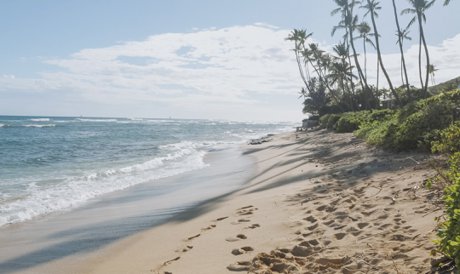
The walk down to the water
This is the part that surprises buyers. Unless you own an oceanfront lot, you don't have private beach access. You reach the sand through public pedestrian lanes, narrow walkways that cut between the houses from Mokulua Drive down to the beach. They're public rights-of-way, and they're how everyone who isn't beachfront gets to the water. When you're buying a home a block or two back, one of the first things I check is which access lane you'd realistically use and how far the walk is.
A few things about the beach itself that matter whether you're buying or just visiting:
- There is no public parking lot, no lifeguard, and no restrooms in Lanikai. The nearest lifeguard towers are at Kailua Beach Park, about a mile away.
- Parking is street-only, and the city has been moving toward permanent "No Parking Any Time" signage along Mokulua and 'A'alapapa Drives. If you're relying on street parking for guests, confirm the current signs on the block before you count on it, because this has been changing.
- Blocking a driveway or a beach-access lane gets you towed, and enforcement steps up on holiday weekends.
None of this is a dealbreaker. It's just the daily reality of owning in a neighborhood that doubles as a tourist stop.
The Mokes and the pillboxes
The two islands offshore are the Mokulua Islands, "the Mokes." Moku Nui is the larger one to the north; Moku Iki is the smaller one to the south. Both are state seabird sanctuaries. Moku Iki is off-limits entirely, and on Moku Nui you're supposed to stay below the high-water mark on the little beach. Most people paddle out by kayak, and the rentals are down at Kailua Beach Park, not in Lanikai.
Above the neighborhood is the Ka'iwa Ridge hike, better known as the Lanikai Pillbox trail. It's short, under a mile, but it climbs about 600 feet fast, with no shade and a surface that gets slick when it's wet. The trailhead sits on Ka'elepulu Drive. I mention it because buyers ask, and because a home's position relative to that ridge affects both your view and your morning foot traffic.
What Lanikai homes cost right now
Lanikai trades in a different bracket than the rest of Kailua. Based on the most recent 12-month window I pulled (roughly September 2025 through August 2026), the median sale price ran a little under $4 million, up meaningfully from the year before, on somewhere around 20-plus sales. Active listings at the time of writing spanned from the high $3 millions up past $30 million for a prime beachfront parcel. Homes were taking around 50 days to go under contract, longer than the year prior.
I want to flag those figures honestly: they come from aggregated market data, not a fresh MLS pull, and Lanikai is a thin market where two or three sales swing the median hard. Before you anchor on a number, I'll run current, address-specific comps for you. In a neighborhood this small, the comp that matters is the one three doors down, not the island-wide average..jpg)
The erosion conversation nobody puts in the brochure
If you take one thing from this page, take this. Lanikai's shoreline has been eroding for decades. It's one of the most-studied chronic erosion stretches on O'ahu. Over the years, many oceanfront owners armored their lots with seawalls, and one long-term effect of that hardening is a beach that has narrowed, and in spots in front of some walls, largely disappeared at high tide. The sand you see in the photos is not evenly distributed, and it's not guaranteed to be there in front of any given oceanfront home.
For a buyer, that turns into real questions. How much usable beach fronts this specific lot at high tide? Is there a seawall, and is it permitted and sound? What does the shoreline setback and sea-level-rise exposure look like for this parcel, and how does that affect future permits to rebuild or renovate? What will insurance cost? I walk oceanfront lots at different tides and pull the shoreline and sea-level-rise mapping before anyone writes an offer. This is also where you'll want a coastal-savvy attorney and your insurance agent involved early, because setback and permitting rules here are their own specialty.
Can you short-term rent in Lanikai?
Short answer: assume no, and verify before you count on any rental income. Lanikai is a residential zone, and O'ahu's short-term rental rules under Ordinance 22-7 (Bill 41) prohibit rentals under the legal minimum in residential areas unless a property holds a valid registration or a grandfathered nonconforming use. The City passed a further ordinance pushing the minimum in residential neighborhoods to 90 days, but a federal court injunction has been blocking enforcement of that 90-day floor, which in practice has kept the enforceable minimum at 30 days while the litigation plays out.
That status has been a moving target, so I don't want you to make a buying decision on my summary of it. If rental use is part of your plan, we confirm the current rule and the specific property's permit status directly with the City's Department of Planning and Permitting before you're in contract. This is educational, not legal advice, and a real estate attorney should sign off on any rental strategy.
Schools and everyday logistics
The neighborhood elementary school, long known as Lanikai Elementary, now operates as Ka'ohao Public Charter School. Beyond that, Lanikai feeds into the Kailua-area public schools, and there are private options across Kailua and Kane'ohe. School assignment, charter enrollment, and geographic exceptions all have their own processes, so I'd research current boundaries and admissions directly rather than trusting any single source. Day to day, you're a few minutes from Kailua town for groceries and restaurants, and the commute into Honolulu runs over the Pali or through Kane'ohe.
Frequently asked questions
Is Lanikai its own town, or part of Kailua?
It's a neighborhood within Kailua, on the south end past the beach park. Same zip, same schools and town services, but a distinct pocket with its own character and its own price bracket.
Do all Lanikai homes have beach access?
Everyone can reach the beach through the public pedestrian lanes between the houses. What varies is convenience. Oceanfront lots front the sand directly; everyone else walks to an access lane. When I show homes, figuring out your actual walk to the water is one of the first things we sort out.
Is it hard to park for guests?
Increasingly, yes. Parking is street-only and the city has been adding "No Parking Any Time" restrictions along the Loop. I'd never assume a block's parking situation from an old listing photo. We check the current signs in person.
How worried should I be about erosion?
It depends entirely on the specific lot, and it's worth taking seriously. Some oceanfront parcels have very little beach at high tide in front of a seawall. I look at each property at different tides and pull the shoreline and sea-level-rise data before we talk offer price.
Can I buy in Lanikai and run it as a vacation rental?
Plan on no unless a property has valid registration or grandfathered status, and confirm the current rule with the City before you rely on any of it. The short-term rental laws here have been in flux, and I won't let a client bank on rental income we haven't verified.
What's the price of entry?
Lanikai runs higher than most of Kailua because so few homes exist and even fewer sit on the water. Recent sales have centered a little under $4 million, with beachfront trading far above that. I'll pull current comps for the exact stretch you're considering.
Thinking about Lanikai?
Lanikai rewards buyers who go in with their eyes open about access, parking, and the shoreline, and it frustrates the ones who bought the postcard. If you want a straight read on a specific home here, or you'd like to see how Lanikai stacks up against the rest of beachside Kailua, I'm glad to help. You can start with current Kailua beachfront listings or the broader Kailua luxury home inventory, and then reach out when you want to walk a property together.
Tony Kawaguchi, R(B), is the broker leading The Kawaguchi Group at eXp Realty in Honolulu (Hawai'i license RB-21841), with 20-plus years and more than $1 billion in career sales across O'ahu. This guide is educational and not a substitute for personalized tax, legal, financing, or insurance advice for your situation..jpg)