Kaimuki Real Estate: Homes, Prices and Neighborhood Guide
By Tony Kawaguchi, REALTOR, The Kawaguchi Group, eXp Realty. Updated November 2026.
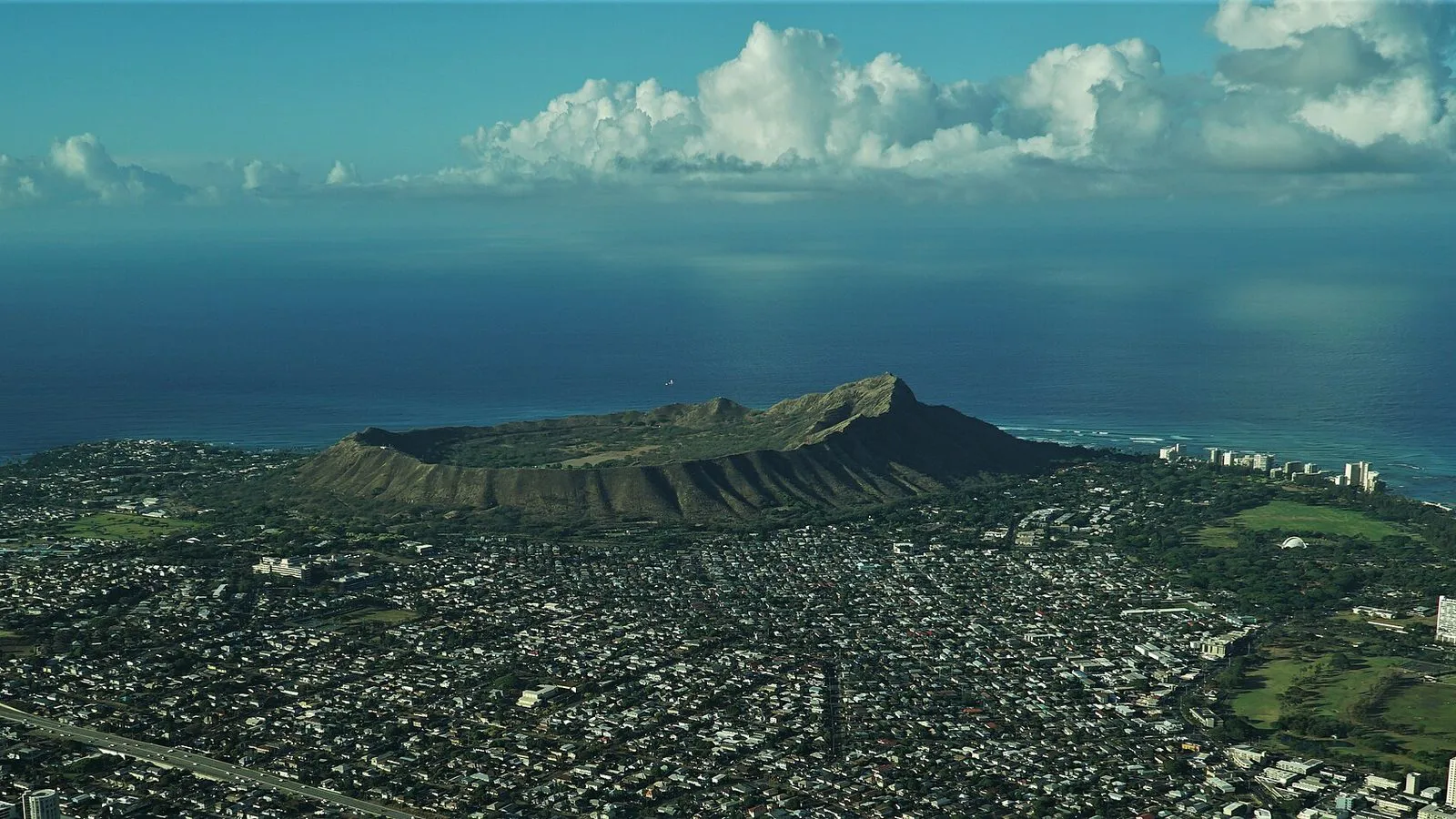
Photo: Eric Tessmer, CC BY 2.0, via Wikimedia Commons, cropped.
Quick answer: Kaimuki is an older Honolulu neighborhood on the hill behind Diamond Head, built around Waialae Avenue and the numbered avenues between Kapahulu and Kahala. It's mostly single-family homes, many from the early 1900s, plus a walkable main street of independent restaurants and shops. From January through October 2026, houses in the Board's Kaimuki neighborhood sold for a median of $1,250,000 on 21 sales, and the wider Kapahulu-Diamond Head area had a median of $1,350,000 on 164 sales. Waikiki is about 7 minutes away and downtown about 10, with no traffic.
Sources: Honolulu Board of REALTORS, Oahu Local Market Update, October 2026 (neighborhood summary and Kapahulu-Diamond Head area, tax-map zones 1-3-1 to 1-3-4), compiled from HiCentral MLS; drive times are my own OpenStreetMap estimates. Checked November 20, 2026.
Where Kaimuki Is and What It Feels Like
Kaimuki sits on the rise between Kapahulu and Kahala, mauka of Diamond Head. Waialae Avenue is the spine. Most of the residential grid runs off it on numbered avenues, from around 1st Avenue near Kapahulu out past 20th Avenue toward Kahala, with Harding Avenue, Pahoa Avenue and Kilauea Avenue crossing them. The H-1 freeway cuts through the middle of the neighborhood, so some blocks are quiet side streets and others hear the freeway.
Kaimuki was laid out in 1898, so it's older than almost every neighborhood you'll compare it with, and the building heights show it: outside of Waialae Avenue, it's houses. The Historic Hawaii Foundation credits the freeway, of all things, with keeping it low-rise. Buyers who land here usually want two things at once: a house on its own lot, and a walk to dinner on Waialae Avenue.
The name and the history
Kaimuki is usually translated as "the ti-root oven" (ka imu ki), after the underground ovens once used here to cook ti root. In 1898 Theodore Lansing and A.V. Gear of Gear, Lansing and Co. bought the dry, rocky land from the Isenberg family and laid out what the Historic Hawaii Foundation describes as the first major subdivision in Hawaii. They dug wells and built a stone reservoir on the hill to sell lots. After the Chinatown fire of January 1900, displaced families and businesses moved out here, and in 1903 the electric streetcar reached Waialae and Koko Head Avenues. Many of the homes you'll tour were built in the decades that followed.
I first wrote about Kaimuki in 2014 in Why Buy in Kaimuki?. The prices in that post are long out of date, but its main point, a house-and-yard neighborhood between Diamond Head and Kahala that's minutes from town, still holds.
Kaimuki Home Prices in 2026
The Honolulu Board of REALTORS reports Kaimuki two ways. Its neighborhood summary breaks out the MLS neighborhood called Kaimuki, along with Kapahulu, Palolo, St. Louis Heights, Wilhelmina Rise and Maunalani Heights. Its area report groups all of those, plus Diamond Head, into the Kapahulu-Diamond Head area (tax-map zones 1-3-1 to 1-3-4). Here are both, for January through October 2026.
| Neighborhood (MLS), Jan to Oct 2026 | Single-family median | Sales | Same period 2025 |
|---|---|---|---|
| Kaimuki | $1,250,000 | 21 | $1,350,000 on 35 sales |
| Kapahulu | $1,360,000 | 28 | $1,400,000 on 24 sales |
| Palolo | $1,162,500 | 34 | $1,003,650 on 40 sales |
| St. Louis Heights | $1,412,500 | 18 | $1,335,000 on 16 sales |
| Wilhelmina Rise | $1,300,000 | 32 | $1,178,500 on 20 sales |
| Maunalani Heights | $1,575,000 | 7 | $2,012,500 on 10 sales |
| Kapahulu-Diamond Head area (1-3-1 to 1-3-4) | Single-family homes | Condos |
|---|---|---|
| Closed sales, Jan to Oct 2026 | 164 (157 in 2025) | 76 (78 in 2025) |
| Median sales price | $1,350,000 (up 4% from $1,300,000) | $655,000 (up 7% from $613,794) |
| Share of original list price received | 98.7% | 95.7% |
| Median days on market | 14 | 59 |
| Active listings at the end of October 2026 | 51 (57 a year earlier) | 46 (47 a year earlier) |
Read the Kaimuki line carefully. Twenty-one sales in ten months is a small sample, and one big remodeled house or one rough fixer can swing the median by $100,000 or more. That's why I price every Kaimuki home off recent sales on the same and nearby blocks, adjusted for lot size, condition and freeway noise, not off a neighborhood median. Houses in the wider area sold at close to full asking price in a median of 14 days, so a well-priced house doesn't sit.
Condos are rare in Kaimuki itself; the Board counted only two Kaimuki condo sales through October. If you want a condo nearby, most of the choices are along Kapahulu Avenue and in the Diamond Head and Waikiki areas.
Source: Honolulu Board of REALTORS, Oahu Local Market Update, October 2026, compiled from HiCentral MLS. For island-wide trends, see my Honolulu market report.
What Kaimuki Houses Are Like
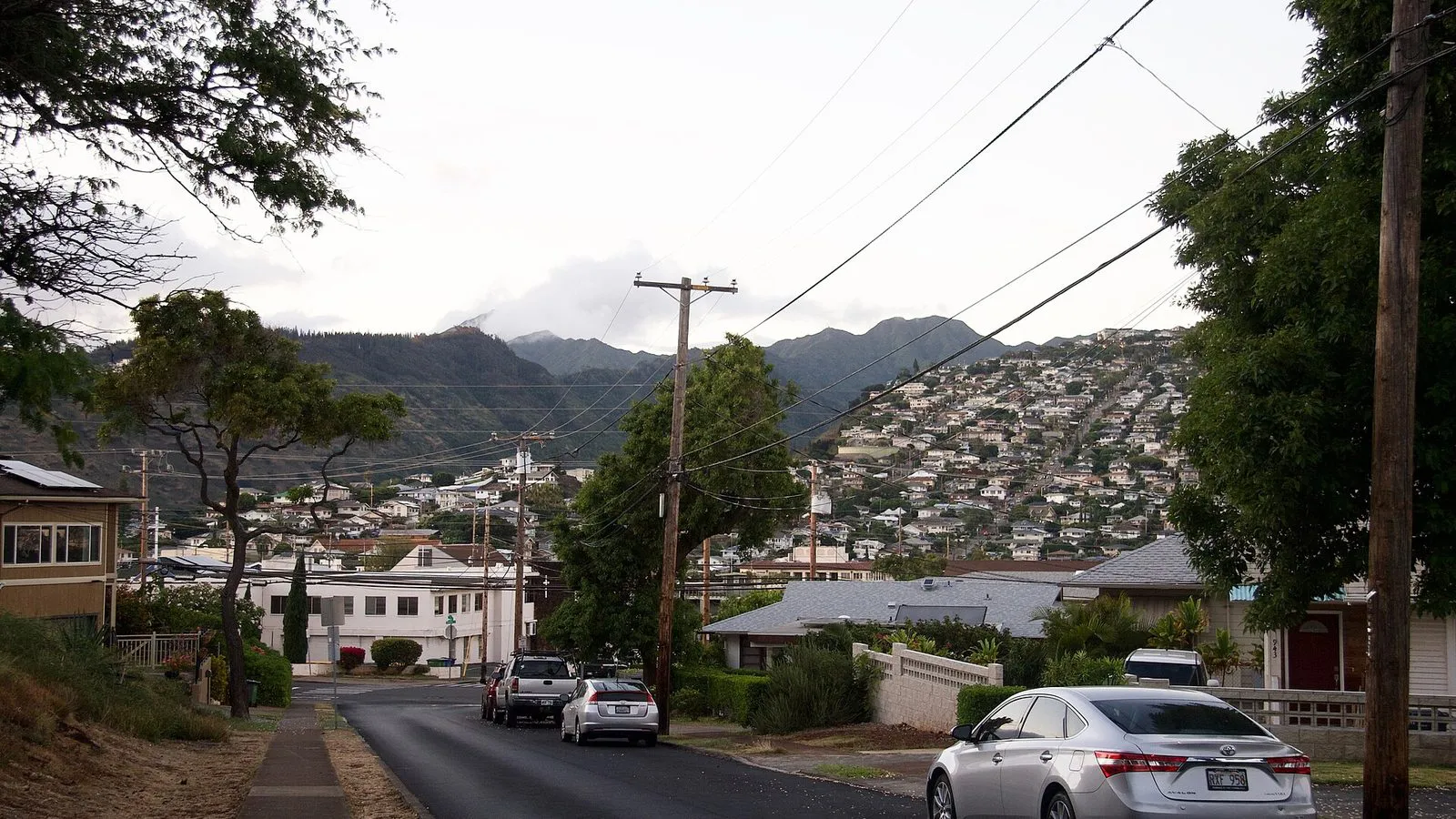
Photo: Achaikon, CC BY-SA 4.0, via Wikimedia Commons, cropped.
Expect older homes. The Historic Hawaii Foundation notes that Kaimuki's streets are still mostly lined with modest early-20th-century houses, many of them single-wall construction, and that many early homes were built by Lewers and Cooke or ordered from catalogs of prefabricated houses shipped from the mainland. You'll also see Craftsman bungalows, post-war homes, and newer rebuilds where an owner tore down and started over.
Lot sizes swing widely from block to block. Over more than a century, many Kaimuki lots were split, combined or built up with a second dwelling. Always check the lot size, zoning and building permits in the city's records rather than trusting a listing description.
Single-wall homes: what that means for you
A single-wall house has exterior walls made of one layer of vertical boards, with no separate interior wall or cavity. They're common in older Hawaii neighborhoods and can be solid houses, but they raise practical questions: termite history and treatment, how wiring and plumbing were run, whether past additions were permitted, and what an insurer will charge. Budget for a thorough inspection and a separate termite inspection, and ask early about insurance.
Adding an ADU or ohana unit
Kaimuki's larger lots are a big reason investors and buyers who want a second unit look here. Under Honolulu's updated Land Use Ordinance (Ordinance 25-2, in effect since September 30, 2025), a residential lot can have one accessory dwelling unit (ADU) and one ohana unit. An ADU can be up to 500 square feet on lots up to 4,999 square feet, or up to 1,000 square feet on lots of 5,000 square feet or more. ADUs must be rented long-term, not as vacation rentals, and the owner records a covenant saying so. Infrastructure and development standards still apply, so confirm with the Department of Planning and Permitting before you pay for a lot's "ADU potential."
Waialae Avenue: Kaimuki's Main Street
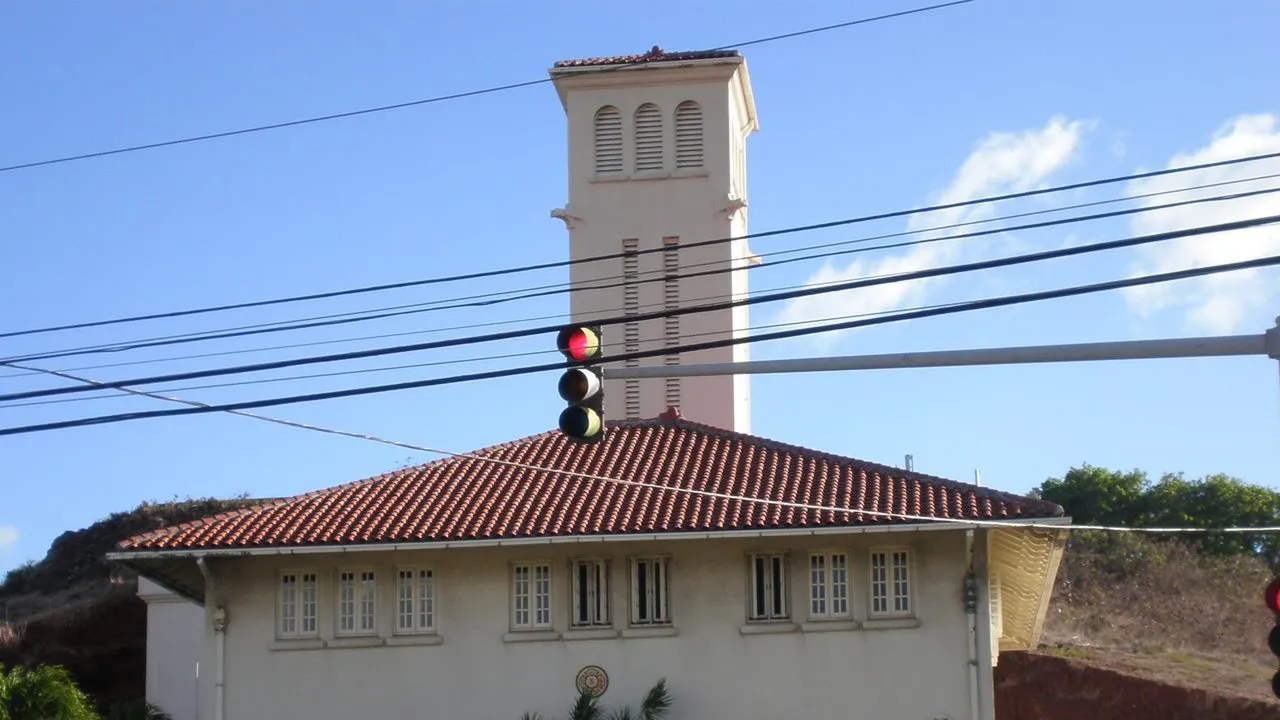
Photo: Joel Bradshaw, public domain, via Wikimedia Commons, cropped.
Waialae Avenue is why many people pick Kaimuki over quieter neighborhoods. The business district runs along the avenue and spills onto the first blocks of the side streets, especially 11th and 12th Avenues and Koko Head Avenue. There's no mall and no chain-store strip; it's storefronts, a public library at Koko Head Avenue and a dining scene that pulls people from all over town.
Restaurants open and close often here, so I only name a few I've confirmed are open at these addresses in November 2026:
- Mud Hen Water, 3452 Waialae Avenue
- The Pig and the Lady, 3650 Waialae Avenue (moved to Kaimuki from Chinatown)
- Koko Head Cafe, 1120 12th Avenue, known for brunch
- Via Gelato, 1142 12th Avenue
Landmarks worth knowing: the Kaimuki fire station, built in 1924 in the Spanish Mission style and still in use; the 1930s Queen Theater marquee on Waialae Avenue, though the theater itself closed in the 1980s; the Kaimuki Public Library at 1041 Koko Head Avenue; and Puu o Kaimuki, the small park at the top of the hill with views over the neighborhood toward Diamond Head. The Kaimuki Christmas Parade has run since 1946.
Parking is the trade-off. On-street parking near Waialae Avenue is tight, and the Historic Hawaii Foundation has called it a long-running problem. If you'll host often or have several cars, look at the driveway and the street before you fall for the house.
Kaimuki's Neighbors: Kapahulu, Palolo, St. Louis Heights and Wilhelmina Rise
Most of my Kaimuki buyers also tour at least one of these four. Commutes are within a few minutes of each other; the houses and streets are not.
- Kapahulu is on the Waikiki side, along Kapahulu Avenue, with older homes, walk-up condos and the shortest trip to the beach and Kapiolani Park.
- Palolo is the valley mauka of Kaimuki. It's greener, with homes on the valley floor and slopes, and it had the lowest single-family median of this group in 2026.
- St. Louis Heights is the ridge between Palolo and Manoa, with homes on winding streets and city or ocean views from many lots.
- Wilhelmina Rise and Maunalani Heights climb the ridge above Kaimuki. Expect steep streets and driveways, and views from many lots.
Farther east, Kaimuki runs into Kahala and Waialae Iki. See my Kahala, Diamond Head and Manoa guides for those. For the bigger picture across town, see Honolulu real estate and my Oahu neighborhoods and regions guide.
Drive Times From Kaimuki
I ran these routes on OpenStreetMap with no traffic on November 20, 2026, from the Kaimuki Public Library on Koko Head Avenue (near Waialae Avenue) and from Maunalani Circle at the top of the ridge. They're my estimates, not guarantees.
| Destination | From Waialae and Koko Head Avenues | From Maunalani Circle |
|---|---|---|
| Waikiki (Kalakaua Avenue at Kapahulu Avenue) | 2.2 miles, about 7 minutes | 3.7 miles, about 12 minutes |
| Honolulu Hale, downtown | 4.7 miles, about 10 minutes | 6.3 miles, about 14 minutes |
| Tripler Army Medical Center | 9.2 miles, about 17 minutes | 10.8 miles, about 22 minutes |
| Daniel K. Inouye International Airport | 10.2 miles, about 19 minutes | 11.7 miles, about 24 minutes |
| Hickam main gate, Joint Base Pearl Harbor-Hickam | 11.3 miles, about 19 minutes | 12.8 miles, about 23 minutes |
| Marine Corps Base Hawaii, Kaneohe Bay (H-3 gate) | 18.4 miles, about 32 minutes | 19.9 miles, about 37 minutes |
| Schofield Barracks | 26.9 miles, about 41 minutes | 28.4 miles, about 46 minutes |
Rush hour on the H-1 westbound can double the trips toward Pearl Harbor and the airport, so drive your real commute at the real hour before you buy. If you're on orders, my Oahu commute times guide and military relocation guide compare neighborhoods by base.
Before You Write an Offer in Kaimuki
Fee simple or leasehold
Don't assume a Kaimuki property is fee simple. Check the tenure on the MLS listing and confirm it in the preliminary title report. If anything is leasehold, read my leasehold vs. fee simple guide first.
Flood and tsunami maps
Kaimuki is on high ground. When I checked FEMA's National Flood Hazard Layer and the state's tsunami evacuation map on November 20, 2026, every point I tested was Zone X and outside the tsunami evacuation zones: Puu o Kaimuki, Waialae Avenue at 3rd Avenue and at Koko Head Avenue, Harding Avenue near 9th, Pahoa Avenue, lower Palolo Avenue and Kapiolani Boulevard where the Manoa-Palolo stream crosses. Those are point checks, not a parcel determination. Look up your exact address on the Hawaii Flood Hazard Assessment Tool.
Permits and additions
Older homes often have decades of changes: enclosed lanai, converted garages, a downstairs unit. Compare what you see to the city's permit history and the tax record's square footage. Unpermitted space can affect financing, insurance and resale.
Property taxes
Honolulu's owner-occupied rate for July 2026 through June 2027 is $3.50 per $1,000 of net taxable value, after a $120,000 home exemption ($160,000 at age 65 and up). On a Kaimuki house assessed at $1,250,000, that's about $3,955 a year. Buy it as a rental or second home and the math changes: with no home exemption and an assessment over $1 million, Residential A rates of $4.00 per $1,000 on the first million and $11.40 above it apply, or roughly $6,850 on the same house. The exemptions rise to $140,000 and $180,000 on July 1, 2027. Rates and exemptions: Honolulu Real Property Assessment Division.
Short-term rentals
Kaimuki isn't in a resort district, so plan on rentals of 30 days or more unless a property holds a nonconforming use certificate. My Oahu vacation rental rules page explains the details.
Schools and safety research
I don't rank schools or call any part of town safe or unsafe. To see which public schools serve a Kaimuki address, use the Hawaii State Department of Education school finder, and compare schools on GreatSchools. Crime statistics for Honolulu are on the FBI Crime Data Explorer.
My Take on Buying in Kaimuki
 I'm Aloha Tony, and I've been selling in Hawaii since 2005. In Kaimuki, two houses on the same block can be decades apart in age and hundreds of thousands of dollars apart in price, so the neighborhood median tells you less here than almost anywhere in town. The buyers who do best decide their trade-offs before touring: freeway noise near the H-1 for a bigger lot, an original 1920s kitchen for a three-block walk to 12th Avenue, a steep Wilhelmina driveway for a view. Houses in this area went under contract in a median of 14 days this year, so there's no time to work it out on the first visit.
Want to see what's for sale in Kaimuki, or find out what your home might sell for? Call or text me at (808) 201-3577, or send me a message, and I'll pull the recent sales on your street.
General information only, not legal, tax, insurance or lending advice. Sales figures, zoning rules and tax rates change, and restaurants come and go faster than anything else on this page. Check anything you'll rely on with the original source or a licensed professional.
Kaimuki FAQ
What do homes cost in Kaimuki in 2026?
From January through October 2026, single-family homes in the MLS neighborhood of Kaimuki sold for a median of $1,250,000 on 21 sales, according to the Honolulu Board of REALTORS. The wider Kapahulu-Diamond Head area, which includes Kaimuki, had a $1,350,000 median on 164 sales. With so few sales, I price each home from recent sales on nearby blocks, not from the median.
What kind of homes are in Kaimuki?
Mostly single-family houses, many built in the first half of the 1900s. You'll find plantation-era and single-wall homes, Craftsman bungalows, post-war houses and newer rebuilds. Kaimuki has very few condos; the Board counted only two Kaimuki condo sales through October 2026. Lot sizes vary block to block, and some lots carry a second dwelling, so check the tax and permit records.
Is Kaimuki in a flood zone or tsunami evacuation zone?
Generally no. Kaimuki sits on high ground. When I checked FEMA's flood map and the state tsunami map in November 2026, every point I tested, from Puu o Kaimuki to Waialae Avenue, Harding Avenue, Pahoa Avenue and lower Palolo Avenue, was Zone X and outside the tsunami evacuation zones. Still look up your exact address on the Hawaii Flood Hazard Assessment Tool.
How far is Kaimuki from Waikiki, downtown and Pearl Harbor?
With no traffic, it's about 7 minutes to Waikiki, 10 minutes to Honolulu Hale downtown, about 19 minutes to the airport and about 19 minutes to the Hickam gate of Joint Base Pearl Harbor-Hickam. Those are OpenStreetMap routing estimates I ran in November 2026 from Waialae and Koko Head Avenues. Rush hour on the H-1 can add a lot, so test your commute.
Can I add an ADU or ohana unit to a Kaimuki home?
Often, yes. Since September 30, 2025, Honolulu's Land Use Ordinance lets a residential lot have one accessory dwelling unit and one ohana unit. An ADU can be up to 500 square feet on lots under 5,000 square feet, or up to 1,000 square feet on larger lots, and must be rented long-term. Confirm zoning, infrastructure and setbacks with the Department of Planning and Permitting first.
What should I inspect on an older Kaimuki house?
Plan on a full home inspection plus a separate termite inspection. Many Kaimuki homes are single-wall construction, so look closely at termite history, wiring, plumbing and the foundation. Compare the house to the city's permit records, because enclosed lanai, garage conversions and downstairs units are common and not always permitted. Ask an insurance agent for a quote early, before your inspection period ends.
Can I rent out a Kaimuki home as a vacation rental?
Not for stays under 30 days, in most cases. Kaimuki isn't in a resort district, so Honolulu limits rentals there to 30 days or more unless the property holds a nonconforming use certificate. Accessory dwelling units also carry a recorded covenant that bans vacation rental use. A long-term rental, or renting an ADU to a long-term tenant, is the usual plan.
What's the difference between Kaimuki, Kapahulu, Palolo and St. Louis Heights?
They sit side by side and share a short commute to town. Kaimuki is the older grid around Waialae Avenue's main street. Kapahulu is closer to Waikiki and has more walk-up condos. Palolo is the valley mauka of Kaimuki and had the lowest house median of the four in 2026. St. Louis Heights is the ridge above, with winding streets and views.